RAJA Group

Design evolution

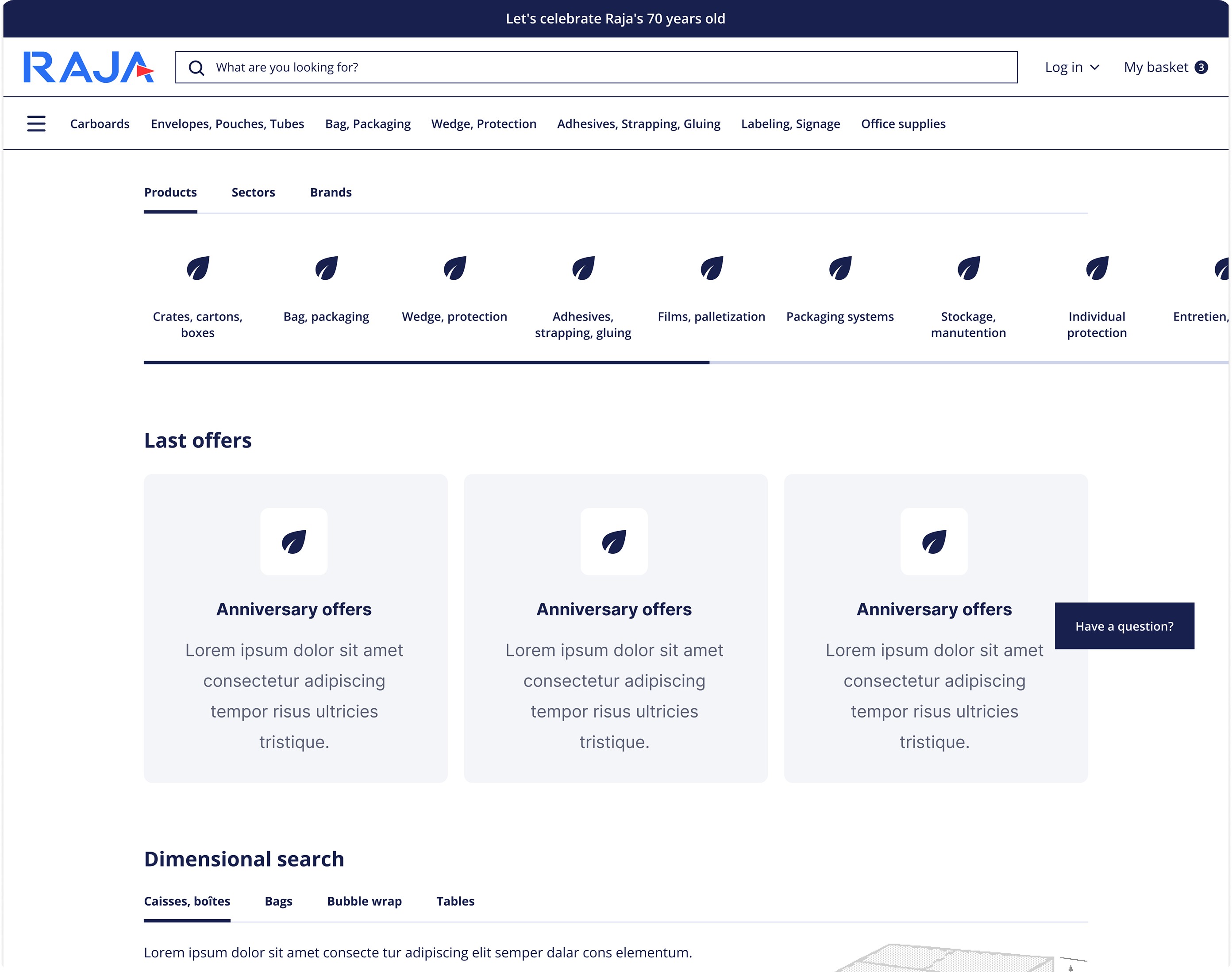
Before revamp
The burger menu was always open and the carousel took too much space.
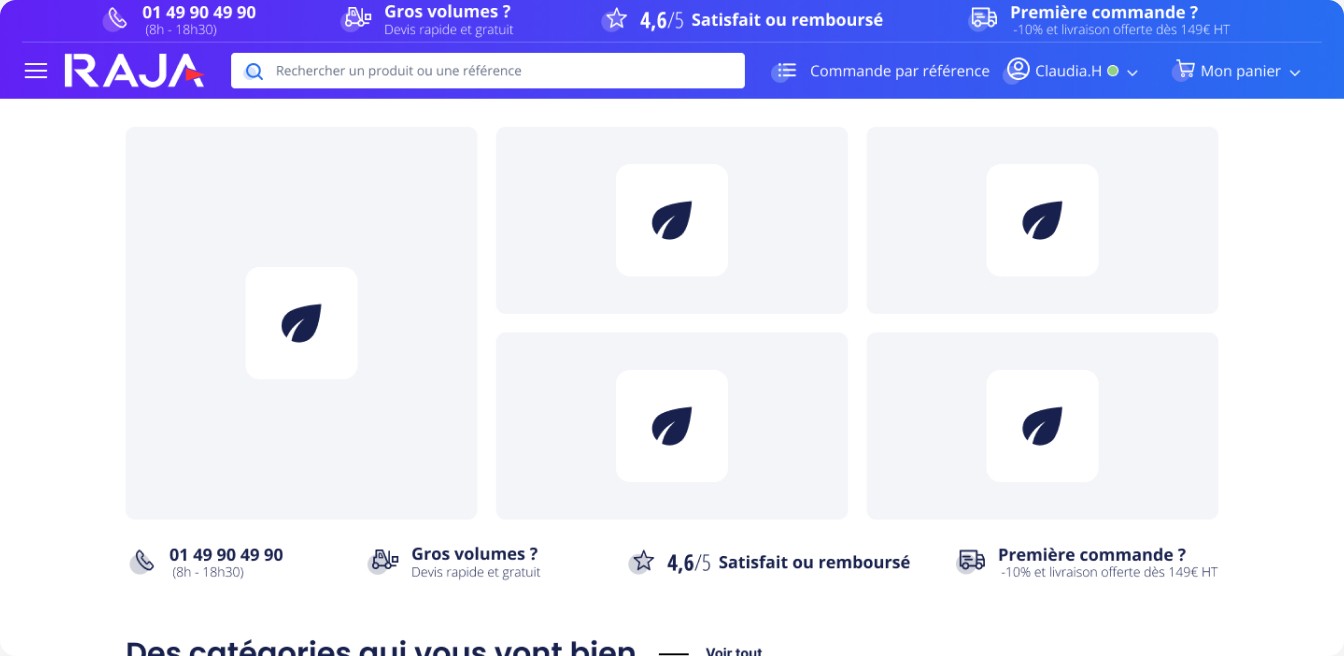
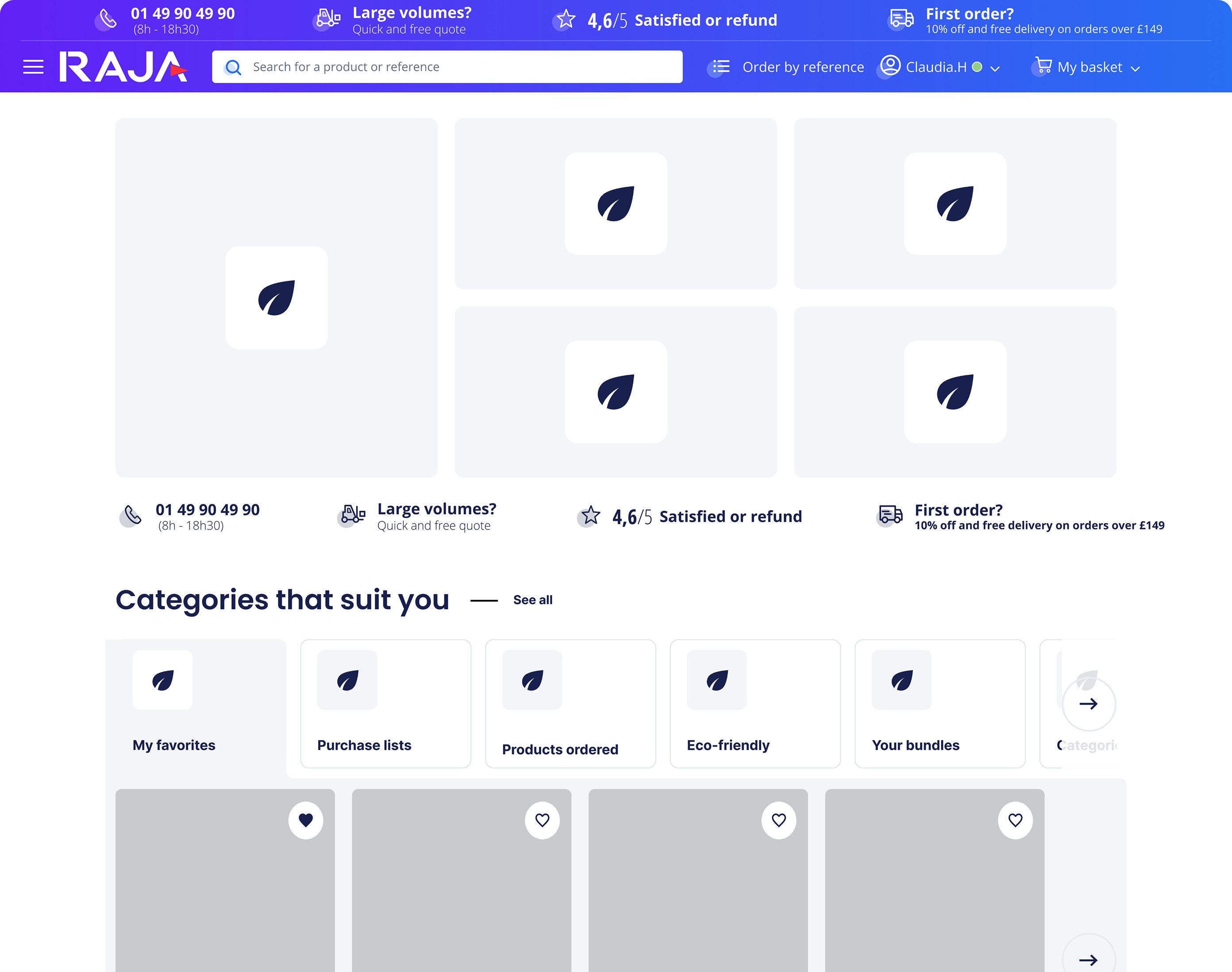
Wireframe attempts
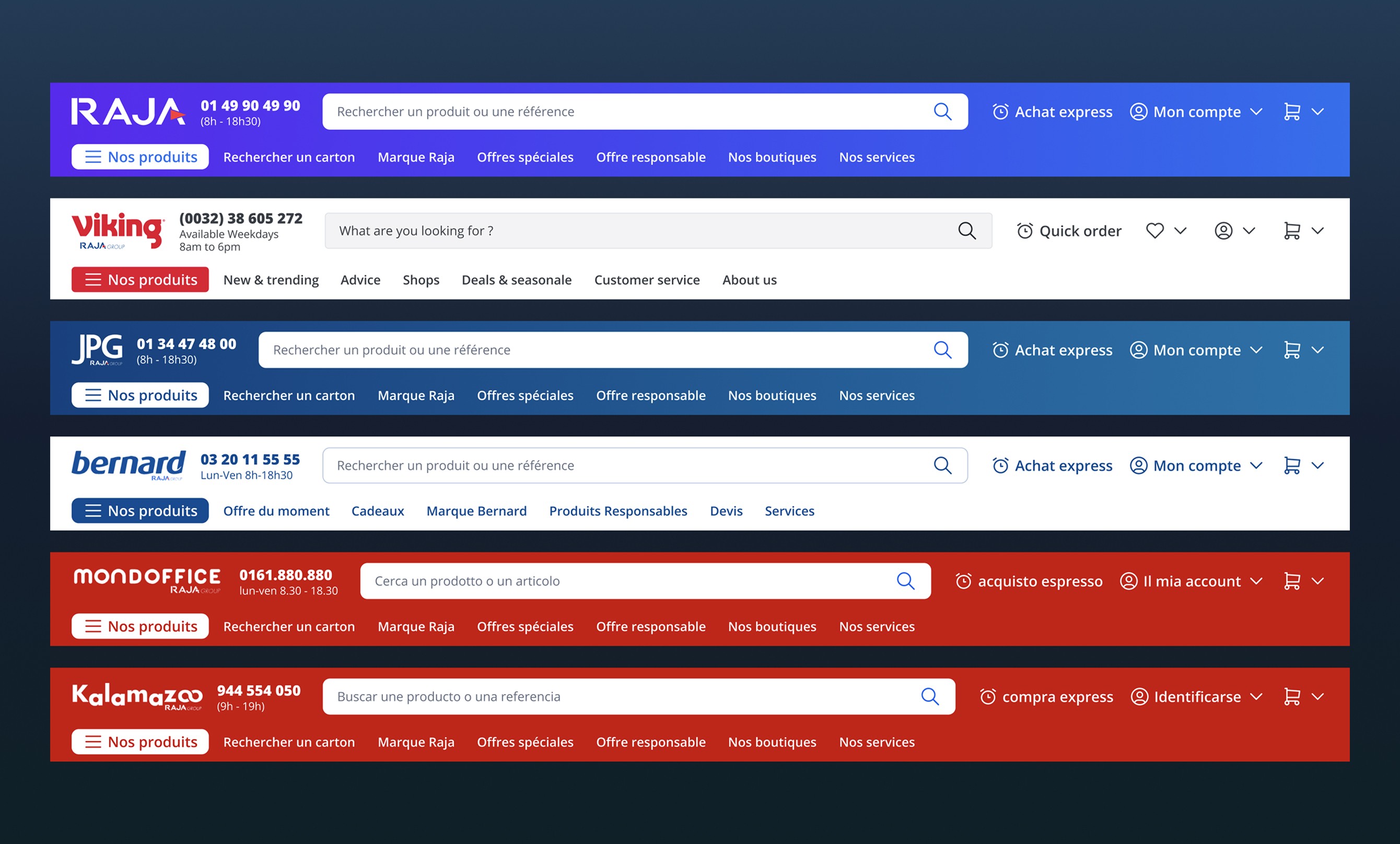
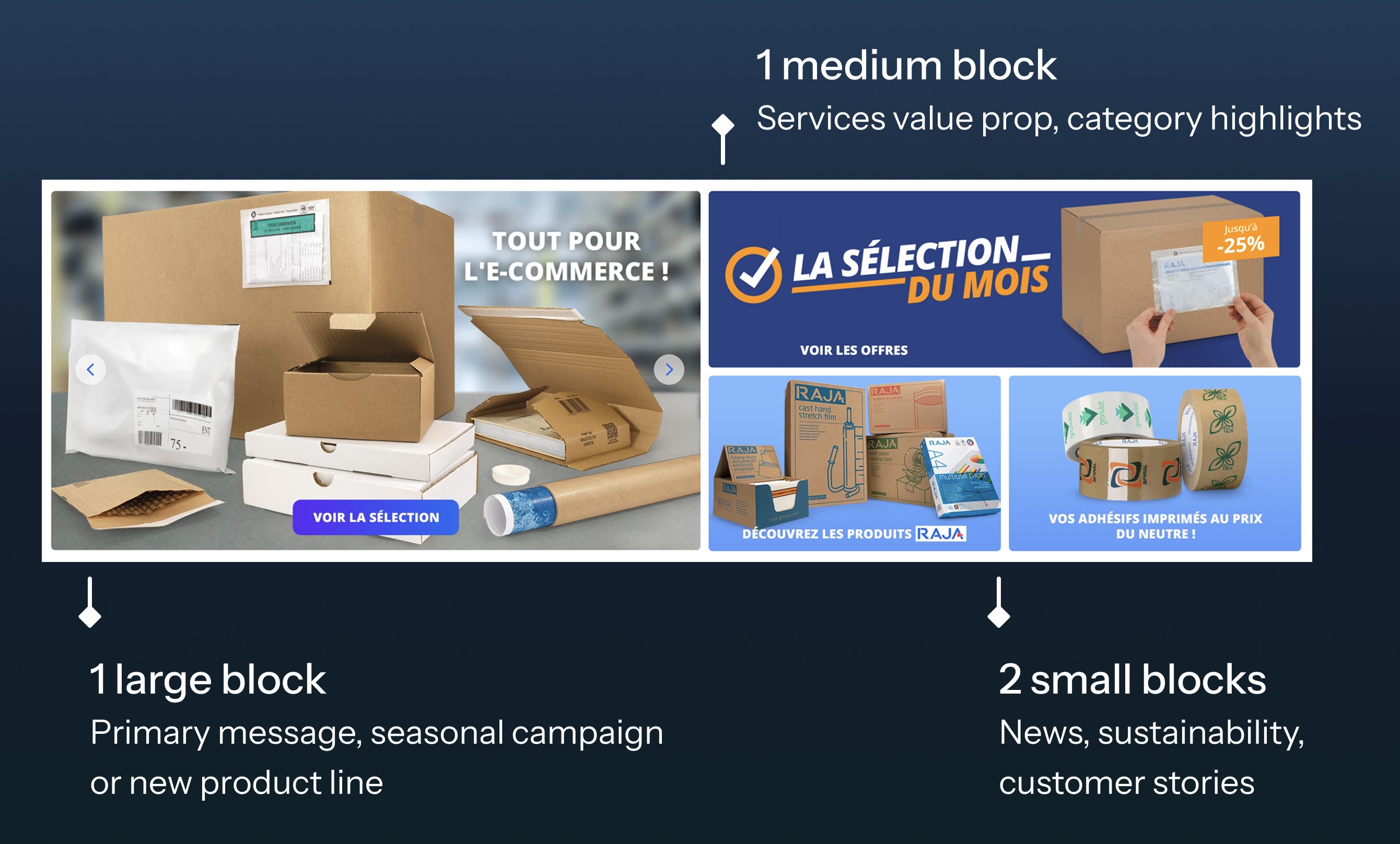
We tried to find a way to show marketing content and clear navigation entrances.
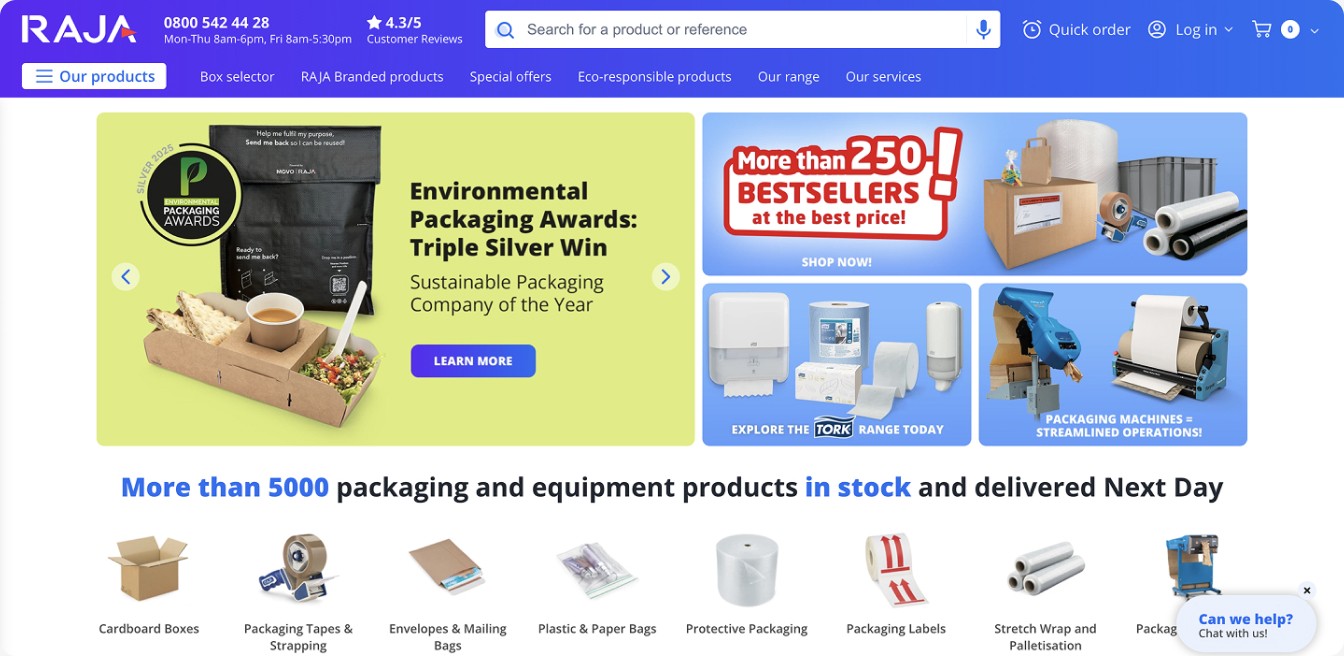
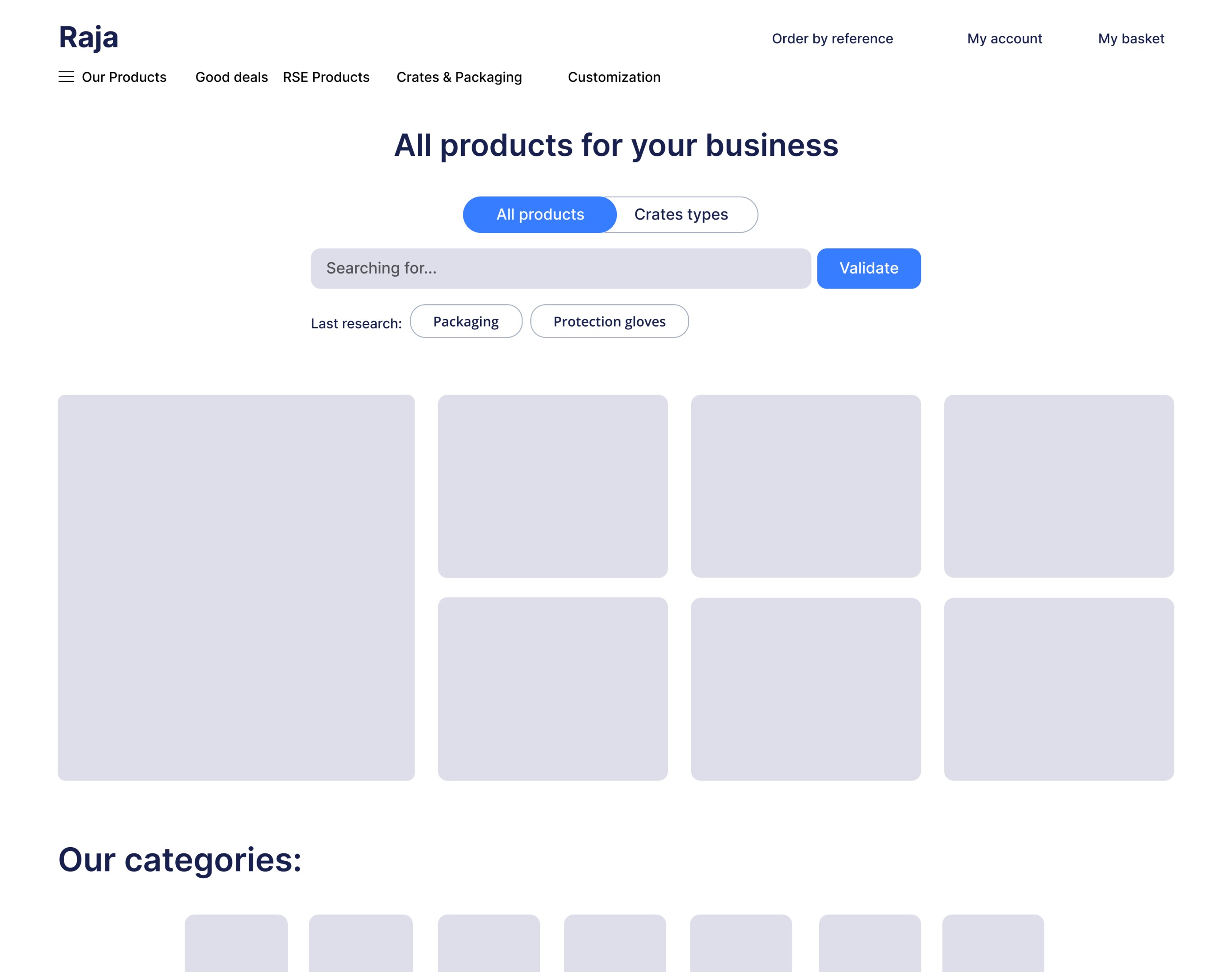
Final version after tests
The result of a complete design process, balancing user and internal needs.


Key insight
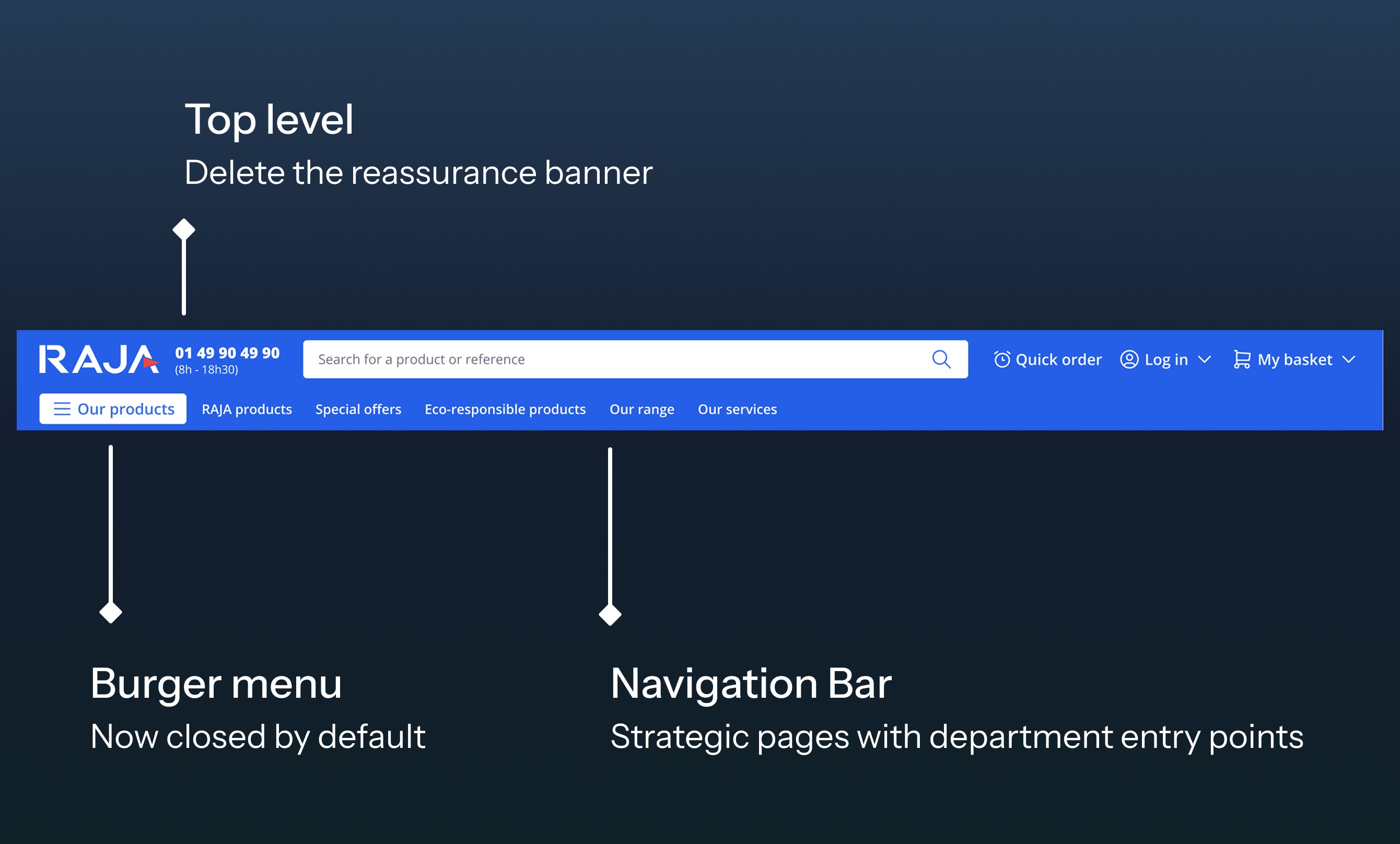
Navigation complexity was creating decision paralysis
and hiding Raja's competitive advantages.
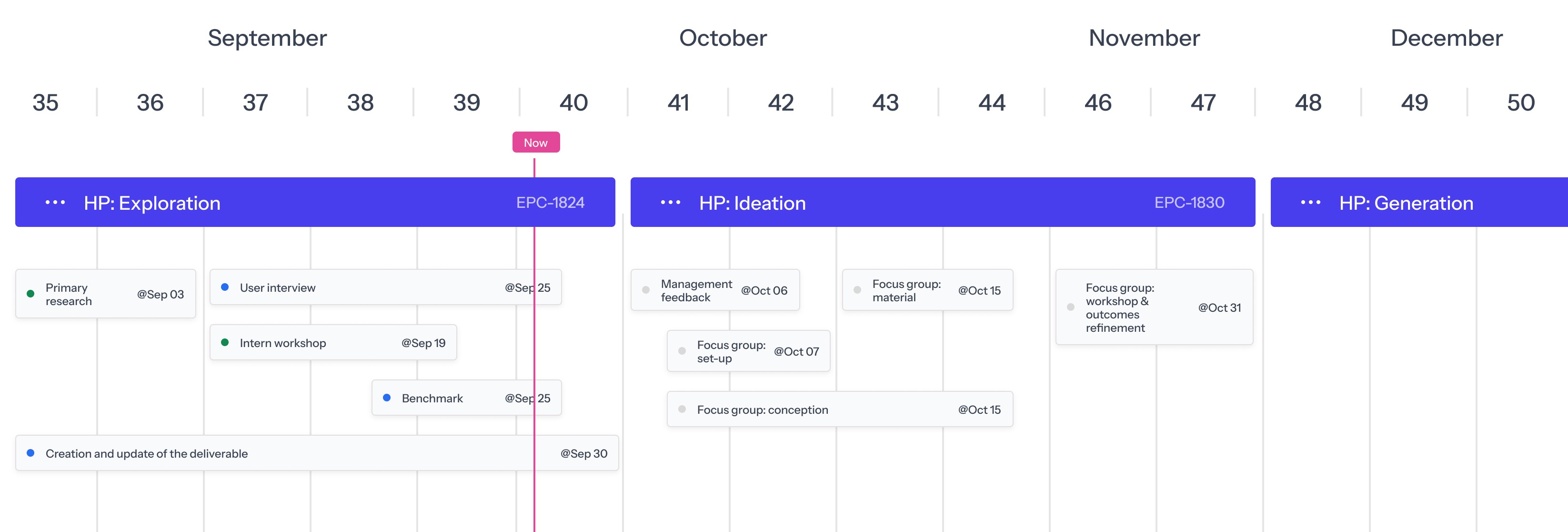
Phase 1
Understanding the current state
Contentsquare & Qualtrics
I first analyzed the last 6 months of Contentsquare data and reviewed the different flows starting from the homepage. To correlate that with the user feedback, I examined customer reviews in Qualtrics.
« The menu on the left is not practical, on a laptop I cannot go down to the menu to access the categories at the bottom »
Raja France
« … For a newbie who has no idea where to look, we are bombarded with too many things in the main menu »
Mondoffice
Key finding
The carousel wasn't clicked and took too much space.
The traffic scrolling below the fold was very low.
The levels 2 & 3 of the burger menu weren't also clicked.
The header's features carried the performance (more than 50% CTR).
Design deep-dive
Content strategy: new vs. returning visitors
The challenge was to design a homepage which would satisfy two audiences with different needs.
New visitors (40%)
Education, trust, discovery
Reassurance banner, service visibility, clear categories, "Why Raja" messaging
Returning visitors (60%)
Quick access, news, promotions
Mosaic news, search prominence, account access, category memory







The results of our work
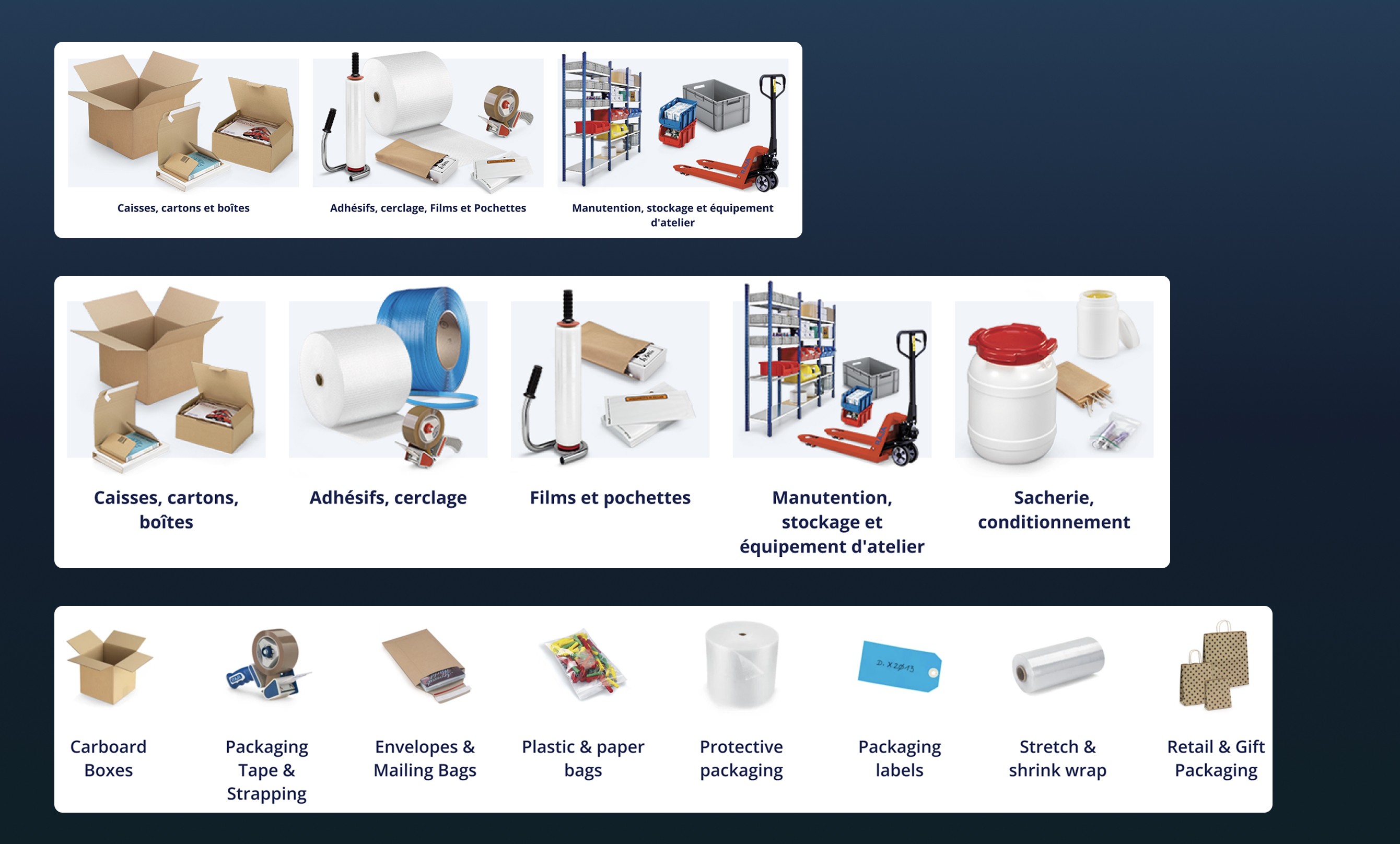
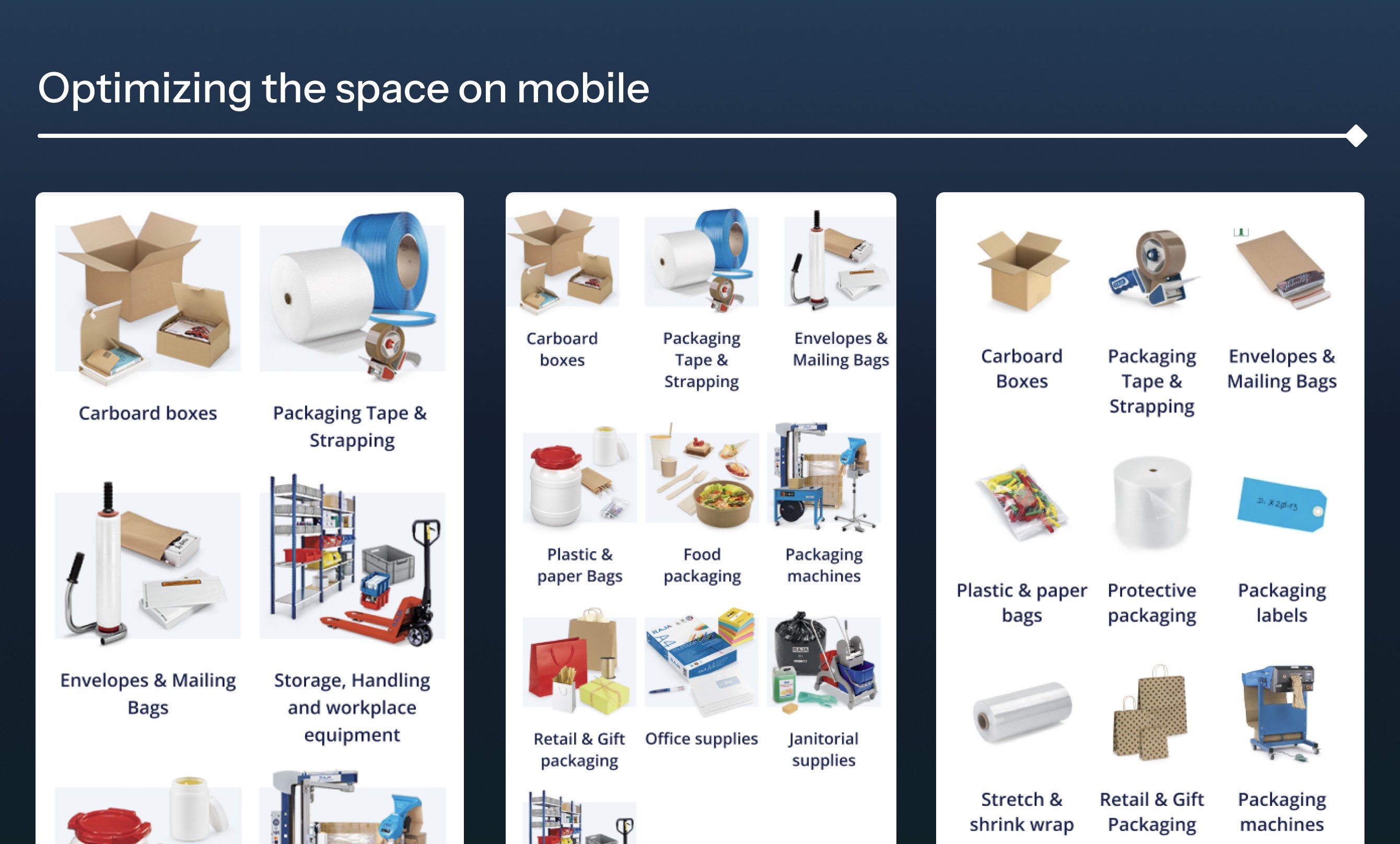
To resolve the last doubts about the number of categories per line, we made an A/B/C test.
This test ran over 3 weeks, and even though the KPIs were good for the new version, we chose to keep displaying 8 categories per line, since the overall stats were better.
0%+
0%+
Global traffic, all devices
0%+
0%+
Category CTR
0€+
0€+
AOV user
0€+
0€+
AOV recurring user
0%+
0%+
Traffic on category pages
0%+
0%+
Product Landing CVR
0%+
0%+
Banner CTR (Mosaic)
0%+
0%+
Search Engine CVR
What made this project successful
Stakeholder workshop approach
Presenting three distinct concepts with trade-offs led to faster, better decisions. Directors felt ownership of strategic direction, preventing later second-guessing.
Key Takeaway: Design multiple options and facilitate decision-making, don't prescribe a single solution to leadership.
Data Changed the Conversation
Once we demonstrated +70% CVR improvement, design earned a seat at strategic discussions. Metrics transform perception from "nice to have" to "business driver."
Key Takeaway: Quantifiable impact is the fastest path to strategic influence.
Progressive validation
Validating direction early (wireframe workshop), then testing implementation (A/B test), reduced risk and built confidence at each phase.
Key Takeaway: Reduce uncertainty progressively rather than betting everything on final design.
Balancing design with stakeholder needs
The challenge wasn't just simplifying for users, it was simplifying while satisfying multiple department requirements. The navigation bar solution elegantly solved both.
Key Takeaway: Best solutions often come from reframing constraints as opportunities.