
Biogen
Research in medical
Research in medical
About this project
Biogen is a leading biotechnology company that pioneers innovative science to deliver new medicines to transform patients' lives and to create value for shareholders and our communities.
I was the user researcher of three major digital health products, spanning 17+ countries with diverse cultural and regulatory contexts:
Neurodiem
A neurology news website to stay up-to-date.
Cleo
An app to accompany people suffering from multiple sclerosis.
PhysioMe
A specialized physical therapy service catering to patients with neuromuscular diseases.
Client
Biogen
Industry
Medical
Year
2021
Role
User researcher
About this project
Biogen is a leading biotechnology company that pioneers innovative science to deliver new medicines to transform patients' lives and to create value for shareholders and our communities.
I was the user researcher of three major digital health products, spanning 17+ countries with diverse cultural and regulatory contexts:
Neurodiem
A neurology news website to stay up-to-date.
Cleo
An app to accompany people suffering from multiple sclerosis.
PhysioMe
A specialized physical therapy service catering to patients with neuromuscular diseases.
Client
Biogen
Industry
Medical
Year
2021
Role
User researcher
Neurodiem
The daily news for neurologists
Context & issues
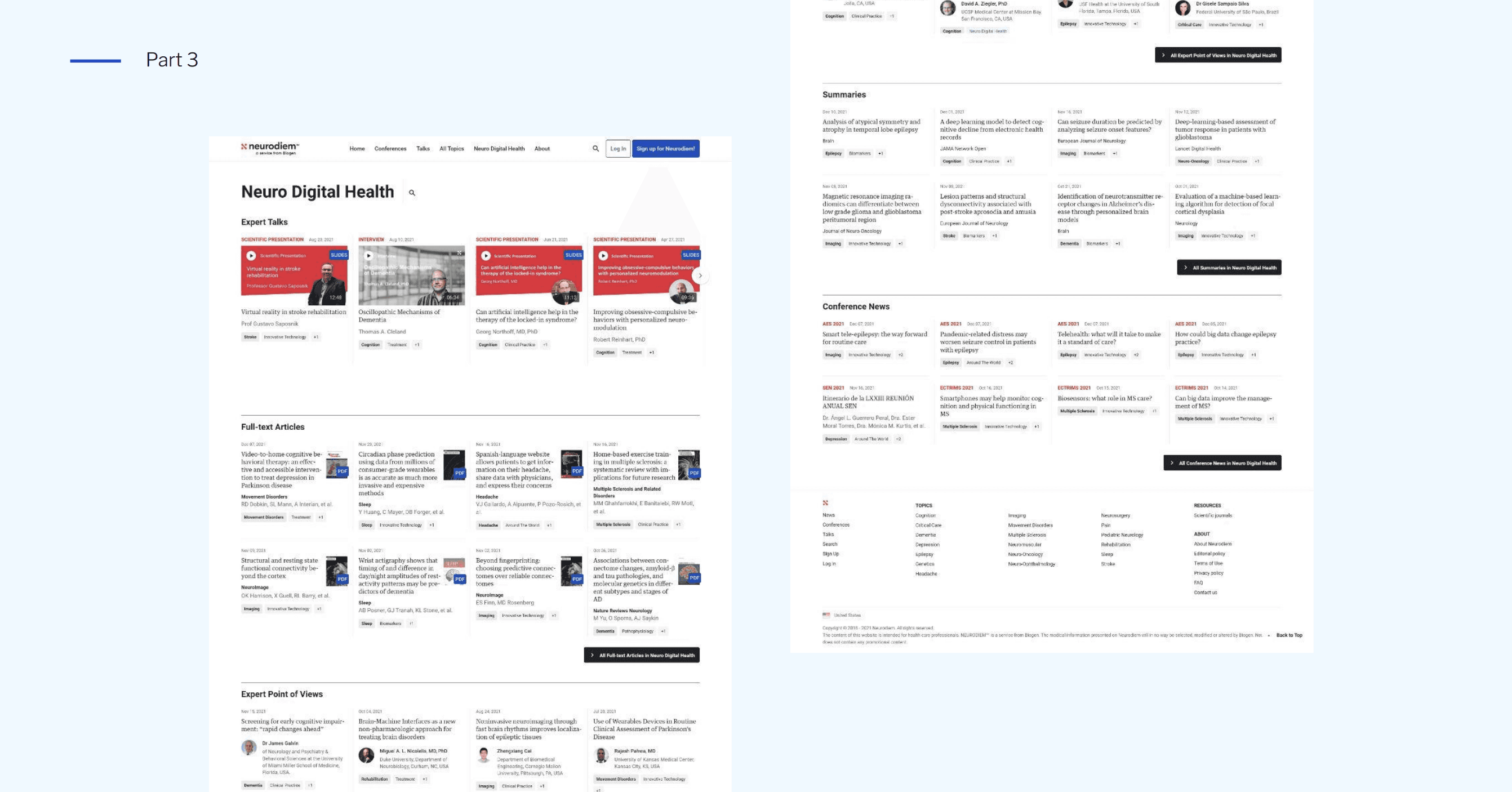
Neurodiem is a neurology news hub offering a rich library of articles and videos to better support neurologists in their daily practice.
However, this website faced confusion around its complex categorization system (topics, primary and secondary labels) and neurologists were skeptical about Biogen's commercial intentions with the platform.
How to reassure neurologists about our intentions?
Orientation of the study
Objectives
Evaluate the new reassurance contents.
Gather feedback on the new topics sorting.
Bonus: open discussion about a new neurology section.
Type of user test
Qualitative
Double-blinded
Panel
10 U.S.A neurologists, 100% non-users.
Exhaustive specialisties, 50/50 generalists & specialists.
Material
Neurodiem website & Figma prototype.
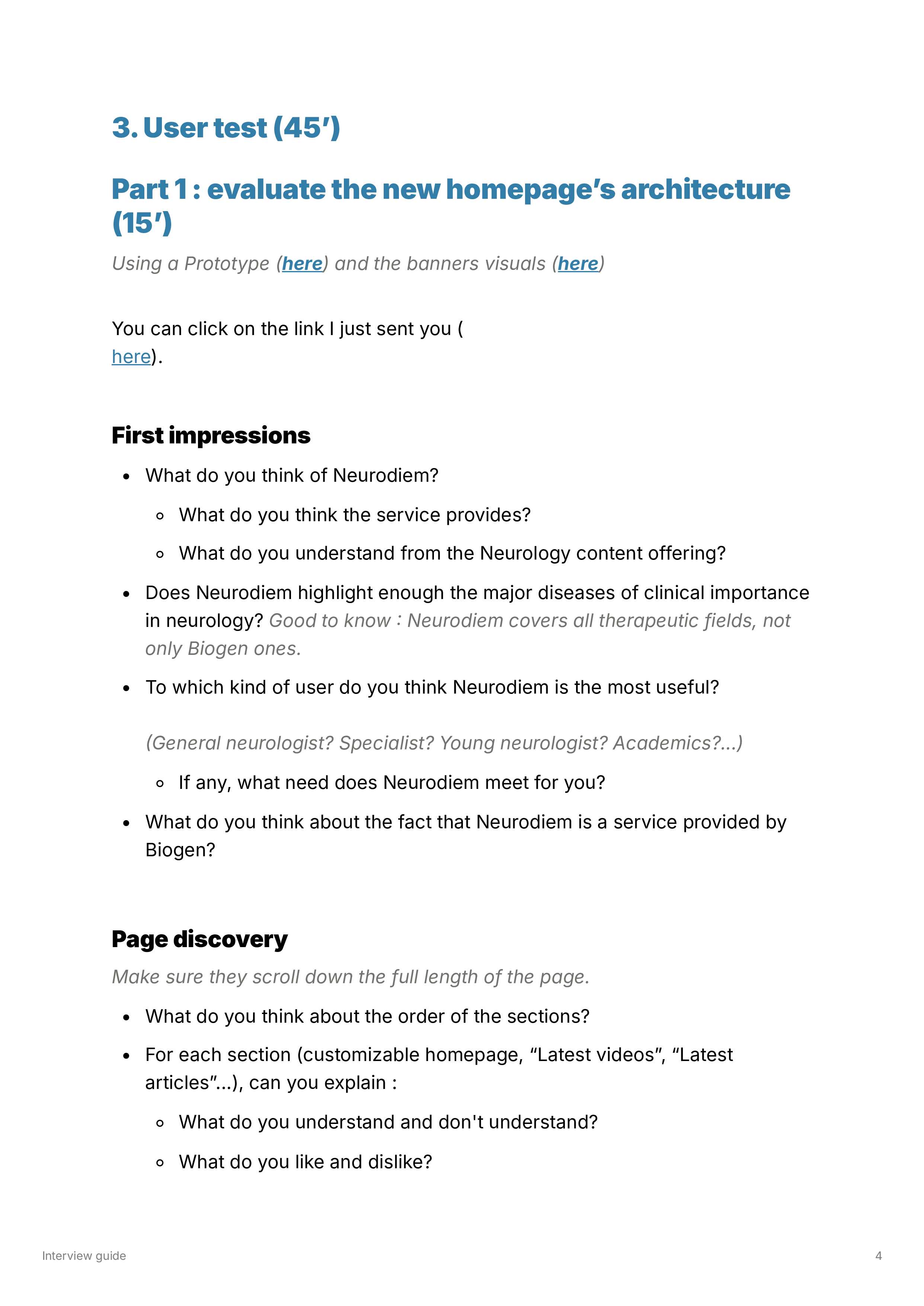
Interview guide
To focus the guide on their perception of the new contents, the main exercise support was a thinking aloud.
1. New homepage’s architecture
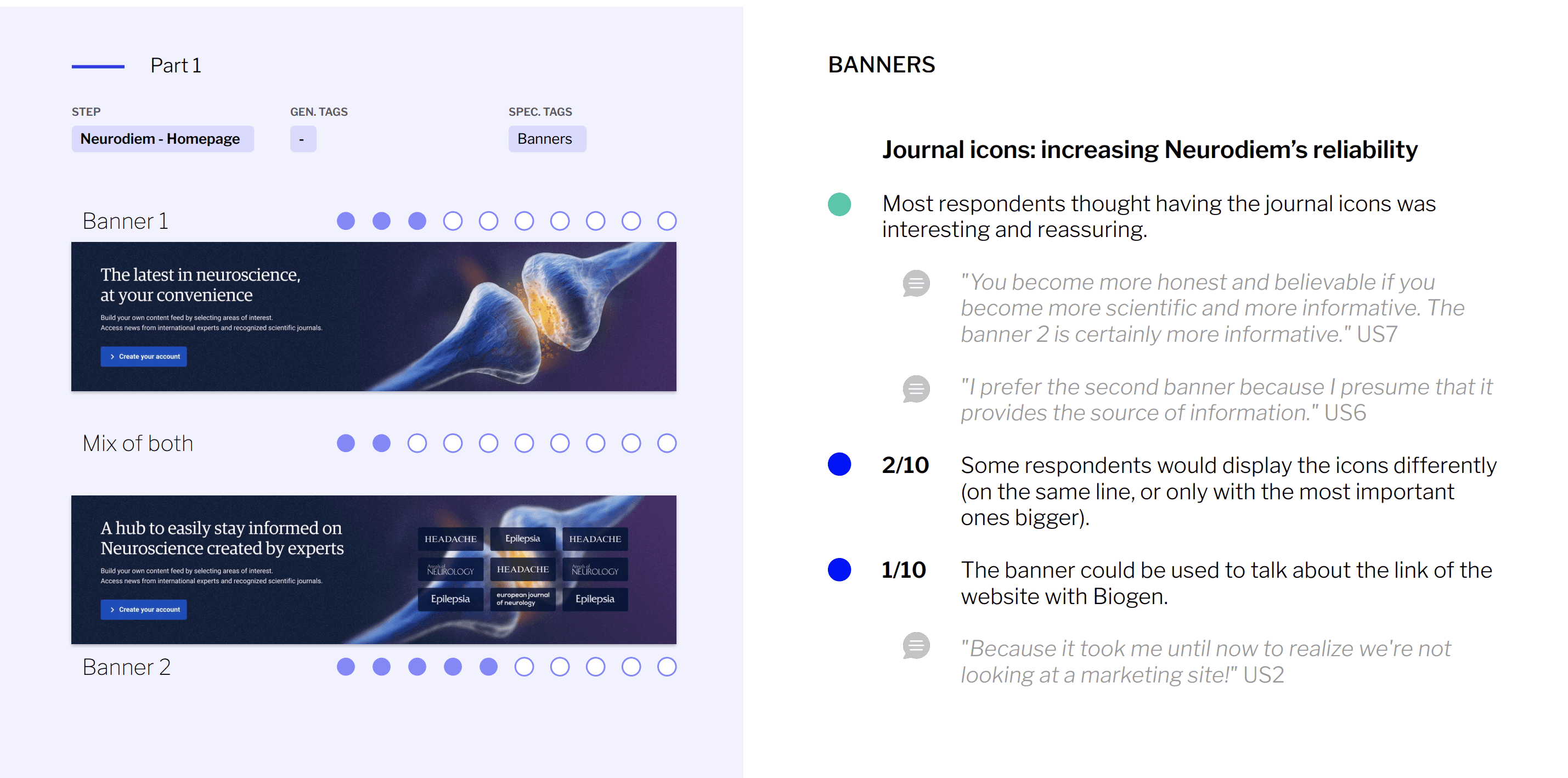
Open questions to dig in some topics after the discovery of the page. Then, an evaluation of 2 banners in competition to find which one was the best to reassure them.
2. New topics page
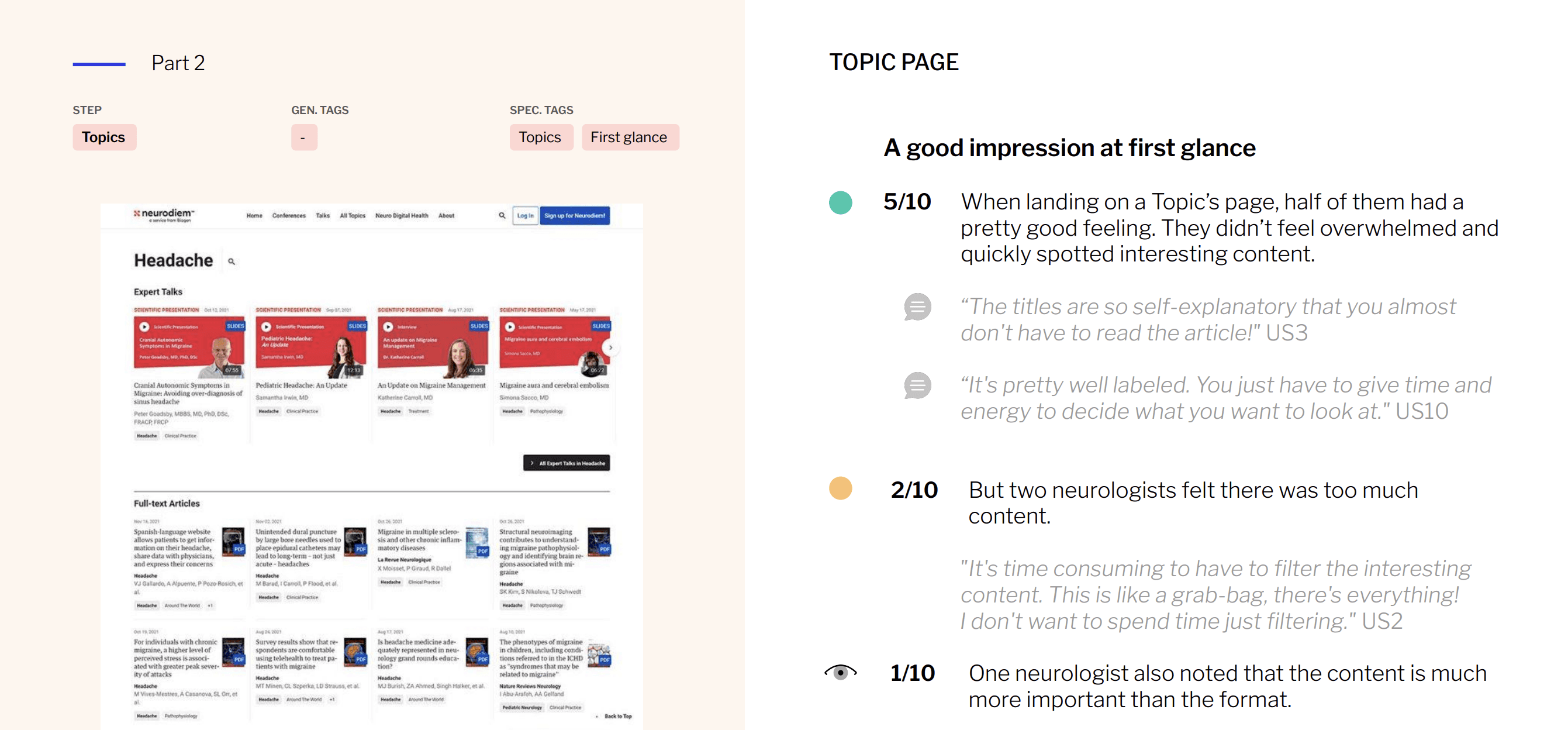
Evaluation of the new topics' relevance. A contents identification among the page by letting them find them and express what they expected to find if they had to click on them.
3. Neuro digital health section
An open discussion with the neurologist to have their point of view about this new section covering diverse subjects. Mostly follow-up questions.


Interview guide
To focus the guide on their perception of the new contents, the main exercise support was a thinking aloud.
1. New homepage’s architecture
Open questions to dig in some topics after the discovery of the page. Then, an evaluation of 2 banners in competition to find which one was the best to reassure them.
2. New topics page
Evaluation of the new topics' relevance. A contents identification among the page by letting them find them and express what they expected to find if they had to click on them.
3. Neuro digital health section
An open discussion with the neurologist to have their point of view about this new section covering diverse subjects. Mostly follow-up questions.

The results
After the 10 interviews conducted by Wedo Studios (to respect the double-blind policy), I quickly reviewed the results to have a first impression, then held a feedback session with the agency to predefine the main deliverable axes.
The results
After the 10 interviews conducted by Wedo Studios (to respect the double-blind policy), I quickly reviewed the results to have a first impression, then held a feedback session with the agency to predefine the main deliverable axes.
Homepage
First glance, topics & banners


It was well received, particularly the personalization feature for logged-in users. Aside, categorization was overly complex (topics, primary and secondary labels), causing initial confusion. The brand reassurance was needed, as neurologists were cautious about Biogen using the hub for commercial purposes.
« I guess if you don't have a specific question in mind and want to learn more about that specific subset of neurology, that could be helpful. »
US 5
Recommandations
Highlight personalization for the not-logged homepage to help neurologists project its value.
Clarify categorization, showing how topics and labels relate for a smoother experience.
Strengthen reassurance messaging throughout the site, including banners, to emphasize content independence.
Homepage
First glance, topics & banners

It was well received, particularly the personalization feature for logged-in users. Aside, categorization was overly complex (topics, primary and secondary labels), causing initial confusion. The brand reassurance was needed, as neurologists were cautious about Biogen using the hub for commercial purposes.
« I guess if you don't have a specific question in mind and want to learn more about that specific subset of neurology, that could be helpful. »
US 5
Recommandations
Highlight personalization for the not-logged homepage to help neurologists project its value.
Clarify categorization, showing how topics and labels relate for a smoother experience.
Strengthen reassurance messaging throughout the site, including banners, to emphasize content independence.
Topics &
Expert talk pages
List of topics & pages


Generally well-received by the neurologists, with positive impressions of categorization and content volume once in the landing page. The american neurologists preferred video content for multitasking (e.g., eating, commuting).
Recommandations
Enhance video display, adding filters like popularity or number of views.
Review our mobile app experience for enhance audio contents like podcast or audible article.
Topics &
Expert talk pages
List of topics & pages

Generally well-received by the neurologists, with positive impressions of categorization and content volume once in the landing page. The american neurologists preferred video content for multitasking (e.g., eating, commuting).
Recommandations
Enhance video display, adding filters like popularity or number of views.
Review our mobile app experience for enhance audio contents like podcast or audible article.
Neuro digital health section
Opinion on the title & the page


Neurologists were unsure about the section name and the link to neurology practice. The issue partly stemmed from my interview guide; an open cloze test might have captured better naming ideas. However, the contents proposed didn’t match their view of the digital neurology practice.
Recommandations
Revamp the page based on feedback.
Conduct new ideation workshops to determine if the issue lies in the name or the topic grouping.
Neuro digital health section
Opinion on the title & the page

Neurologists were unsure about the section name and the link to neurology practice. The issue partly stemmed from my interview guide; an open cloze test might have captured better naming ideas. However, the contents proposed didn’t match their view of the digital neurology practice.
Recommandations
Revamp the page based on feedback.
Conduct new ideation workshops to determine if the issue lies in the name or the topic grouping.
Outcomes of my works on Neurodiem
Continuous improvement
Step by step, we've enhanced Neurodiem with personalization, usability, and trust improvement for neurologists across different markets.
Key Takeaway: User test judging personalization features on the homepage, clarifying categorization relationships, and strengthening reassurance messaging about content independence.
Country adaptation
Reveal the need for more structured, context-rich experiences, influencing future localization strategies beyond simple translation during my tests with Japanese neurologists.
Key Takeaway: Usability test with 10 Japanese neurologists. Highlight the insight that patterns can differ from a country to another. Beyond simple translation, a website should match the behaviors of different ethnic groups.
Improve the notifications
Optimize our mobile app notifications by findings neurologists caught up news during lunch breaks and valued concise, audible formats.
Based on this, I proposed adding audible executive summaries to each article and timed podcast pushes to match their availability.
Key Takeaway: Exploratory survey on User Zoom with 50 neurologists across Europe to explore daily routine to stay up-to-date, and perception of notifications.
Outcomes of my works on Neurodiem
Continuous improvement
Step by step, we've enhanced Neurodiem with personalization, usability, and trust improvement for neurologists across different markets.
Key Takeaway: User test judging personalization features on the homepage, clarifying categorization relationships, and strengthening reassurance messaging about content independence.
Country adaptation
Reveal the need for more structured, context-rich experiences, influencing future localization strategies beyond simple translation during my tests with Japanese neurologists.
Key Takeaway: Usability test with 10 Japanese neurologists. Highlight the insight that patterns can differ from a country to another. Beyond simple translation, a website should match the behaviors of different ethnic groups.
Improve the notifications
Optimize our mobile app notifications by findings neurologists caught up news during lunch breaks and valued concise, audible formats.
Based on this, I proposed adding audible executive summaries to each article and timed podcast pushes to match their availability.
Key Takeaway: Exploratory survey on User Zoom with 50 neurologists across Europe to explore daily routine to stay up-to-date, and perception of notifications.
Cleo
Ease a critical flow
Context & issues
Context
Our app Cleo (Aby outside France) acts as a genuine health companion, helping patients manage daily life beyond the multiple sclerosis (MS) disease.
For that, the app delivered practical daily support while complying with strict medical frameworks.
Issues
50% abandonment rate during the sign-up flow, because of cognitive fatigue for multiple sclerosis patients.
How to optimize our sign up flow to make it less overwhelming?
The flows we would test
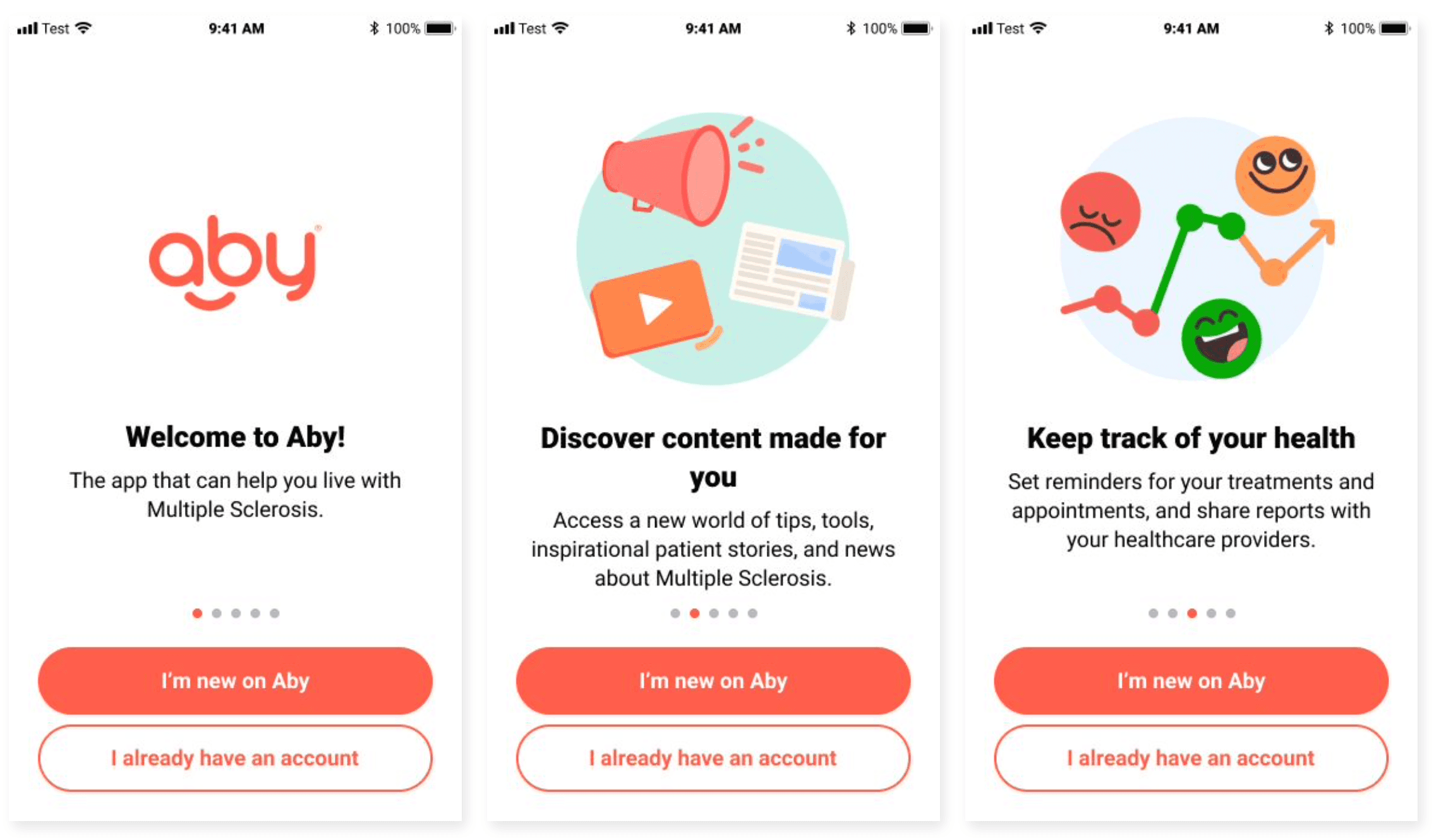
1. One question per screen
To ease the quantity of information, but the flow would be longer with 8 steps
2. Only mandatory questions
A 5 steps flow with only the questions useful to setup the account. The personalization would be done after that in the account part.
Ease a critical flow
Context & issues
Context
Our app Cleo (Aby outside France) acts as a genuine health companion, helping patients manage daily life beyond the multiple sclerosis (MS) disease.
For that, the app delivered practical daily support while complying with strict medical frameworks.
Issues
50% abandonment rate during the sign-up flow, because of cognitive fatigue for multiple sclerosis patients.
How to optimize our sign up flow to make it less overwhelming?

The flows we would test
1. One question per screen
To ease the quantity of information, but the flow would be longer with 8 steps
2. Only mandatory questions
A 5 steps flow with only the questions useful to setup the account. The personalization would be done after that in the account part.
Preparation of the study
Objectives
Testing the 2 flows. Half of the panel start with the first flow, the other half with the 2nd to ensure balanced insights.
Type of user test
Qualitative, in double-blinded.
Panel
10 MS patients of varying severity, 100% non-users.
Material & activities
Figma prototype,
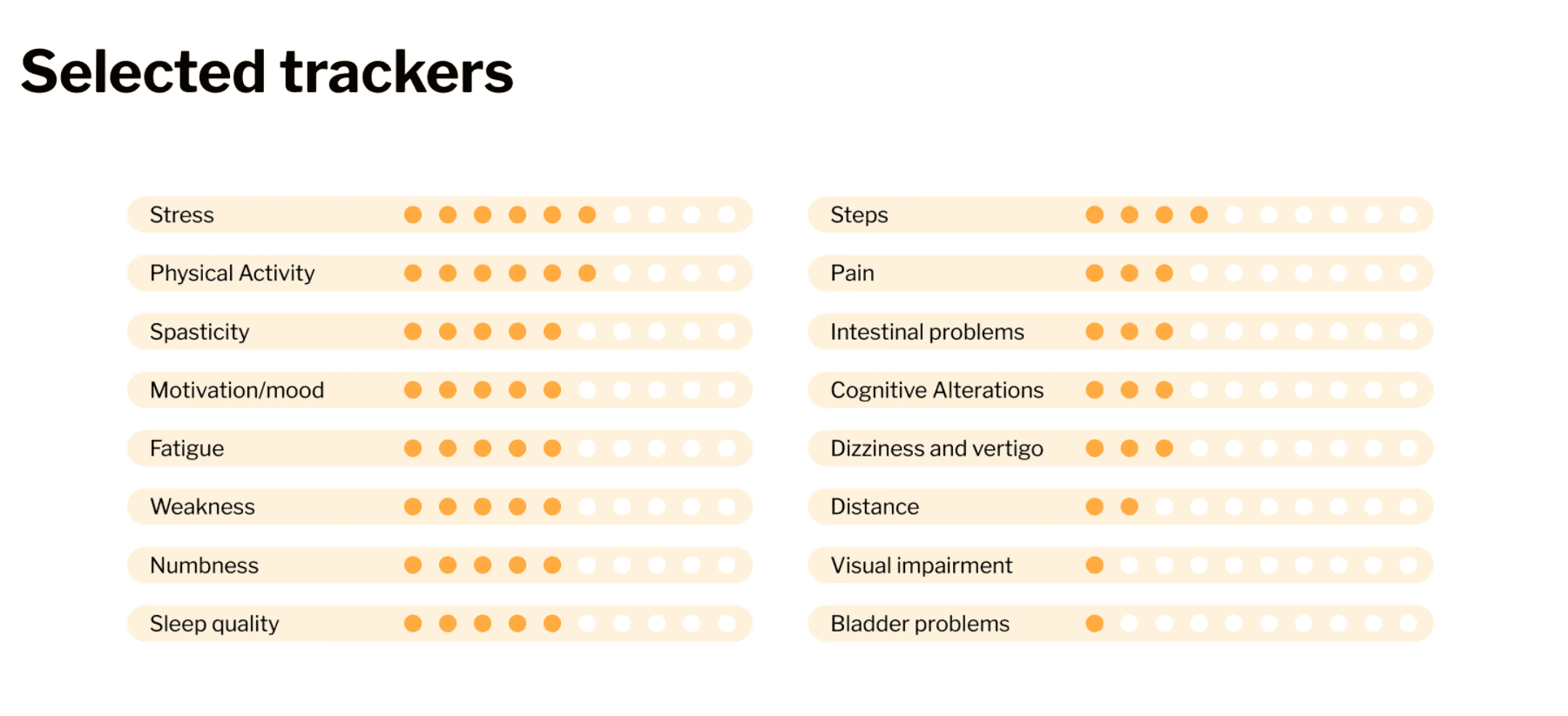
Think aloud, card sorting & UX Scale

Preparation of the study
Objectives
Testing the 2 flows. Half of the panel start with the first flow, the other half with the 2nd to ensure balanced insights.
Type of user test
Qualitative, in double-blinded.
Panel
10 MS patients of varying severity, 100% non-users.
Material & activities
Figma prototype,
Think aloud, card sorting & UX Scale

Key thought
Is progressive design would be the answer?
A salvator postponed
Due to Thanksgiving period our tests were postponed, giving us time to strengthen the weakest flow.
Meanwhile, we were exploring emotional design with my user research colleague Melina Angelo to resolve feedback that our healthcare apps felt “too white”.
It’s in this context that I suggested a dynamic continuous background that evolved with each completed step; an idea adopted to enhance brand perception and user engagement.
How to optimize our sign up flow to make it less overwhelming?
Results & feedback
Continuous improvement
Although my mission ended before results were measured, the solution positioned the app for greater emotional connection with users.
You can find the results of this study case in the portfolio of Arthur DACQUET.
As I could see, these adjustments reduced the abandonment rate while significantly enhancing the quality of user data for personalization.
Key Takeaway: User test judging personalization features on the homepage, clarifying categorization relationships, and strengthening reassurance messaging about content independence.
Although my mission ended before results were measured, the solution positioned the app for greater emotional connection with users.
You can find the results of this study case in the portfolio of Arthur DACQUET.
As I could see, these adjustments reduced the abandonment rate while significantly enhancing the quality of user data for personalization.
Key Takeaway: User test judging personalization features on the homepage, clarifying categorization relationships, and strengthening reassurance messaging about content independence.
0-
0-
Abandonment score
A study which could be enhanced
By reflecting on this case study, I would now approach differently.
The user test was too long, leading to cognitive fatigue for participants.
In hindsight, focusing the user test on the flow with the background and moving the card sorting to a quantitative survey on UserZoom would save precious minutes for the comfort of the patients.
Results & feedback
Continuous improvement
Although my mission ended before results were measured, the solution positioned the app for greater emotional connection with users.
You can find the results of this study case in the portfolio of Arthur DACQUET.
As I could see, these adjustments reduced the abandonment rate while significantly enhancing the quality of user data for personalization.
Key Takeaway: User test judging personalization features on the homepage, clarifying categorization relationships, and strengthening reassurance messaging about content independence.
0-
0-
Abandonment score
A study which could be enhanced
By reflecting on this case study, I would now approach differently.
The user test was too long, leading to cognitive fatigue for participants.
In hindsight, focusing the user test on the flow with the background and moving the card sorting to a quantitative survey on UserZoom would save precious minutes for the comfort of the patients.
PhysioMe
Bring the first bricks
Context & issues
The Spinal Muscular Atrophy (SMA) is a rare genetic disorder causing progressive muscle weakness.
To help people suffering of it, Biogen would create a digital solution allowing patients to exercise, with the help of their physiotherapists.
Before starting to do anything, we've searched to understand of SMA patients' daily realities.
How to help people suffering of SMA?


Learn more about the patients life
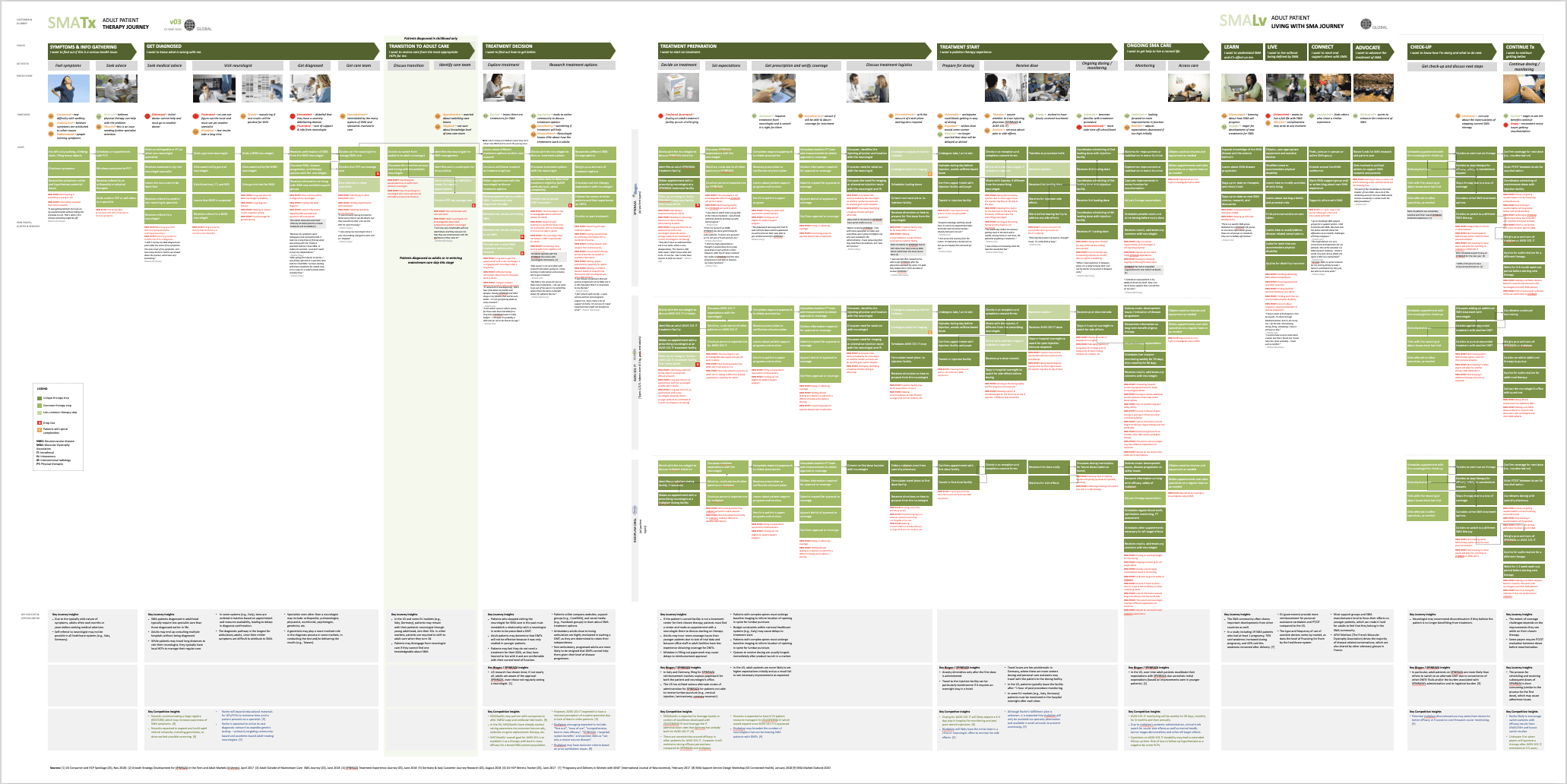
My lead designer had already gathered valuable insights, including a user journey mapping the path from early symptoms to therapy setup.
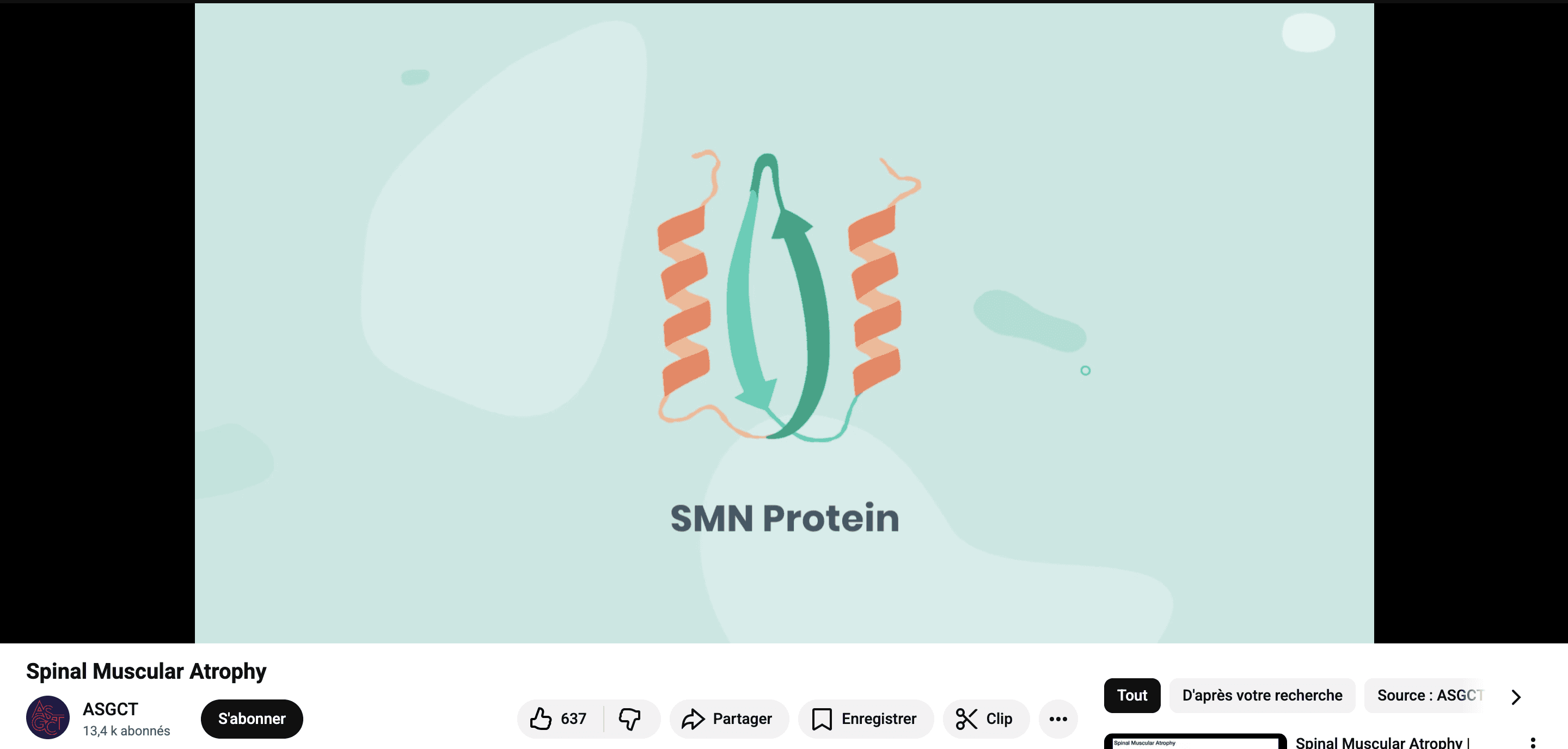
In addition, I immersed myself in the daily realities of SMA patients by watching countless videos. Those testimonies revealed the daily challenges of living with SMA and the importance of maintaining muscle strength.
These insights acted as a shortcut to empathy, providing valuable context long before direct patient research.
Bring the first bricks
Context & issues
The Spinal Muscular Atrophy (SMA) is a rare genetic disorder causing progressive muscle weakness.
To help people suffering of it, Biogen would create a digital solution allowing patients to exercise, with the help of their physiotherapists.
Before starting to do anything, we've searched to understand of SMA patients' daily realities.
How to help people suffering of SMA?


Learn more about the patients life
My lead designer had already gathered valuable insights, including a user journey mapping the path from early symptoms to therapy setup.
In addition, I immersed myself in the daily realities of SMA patients by watching countless videos. Those testimonies revealed the daily challenges of living with SMA and the importance of maintaining muscle strength.
These insights acted as a shortcut to empathy, providing valuable context long before direct patient research.
A giant step thanks to the associations
We also partnered with CureSMA, the largest U.S. SMA association, which shared a survey report filled with raw data.
I cleaned it and synthesized to deliver actionable insights at the direction.
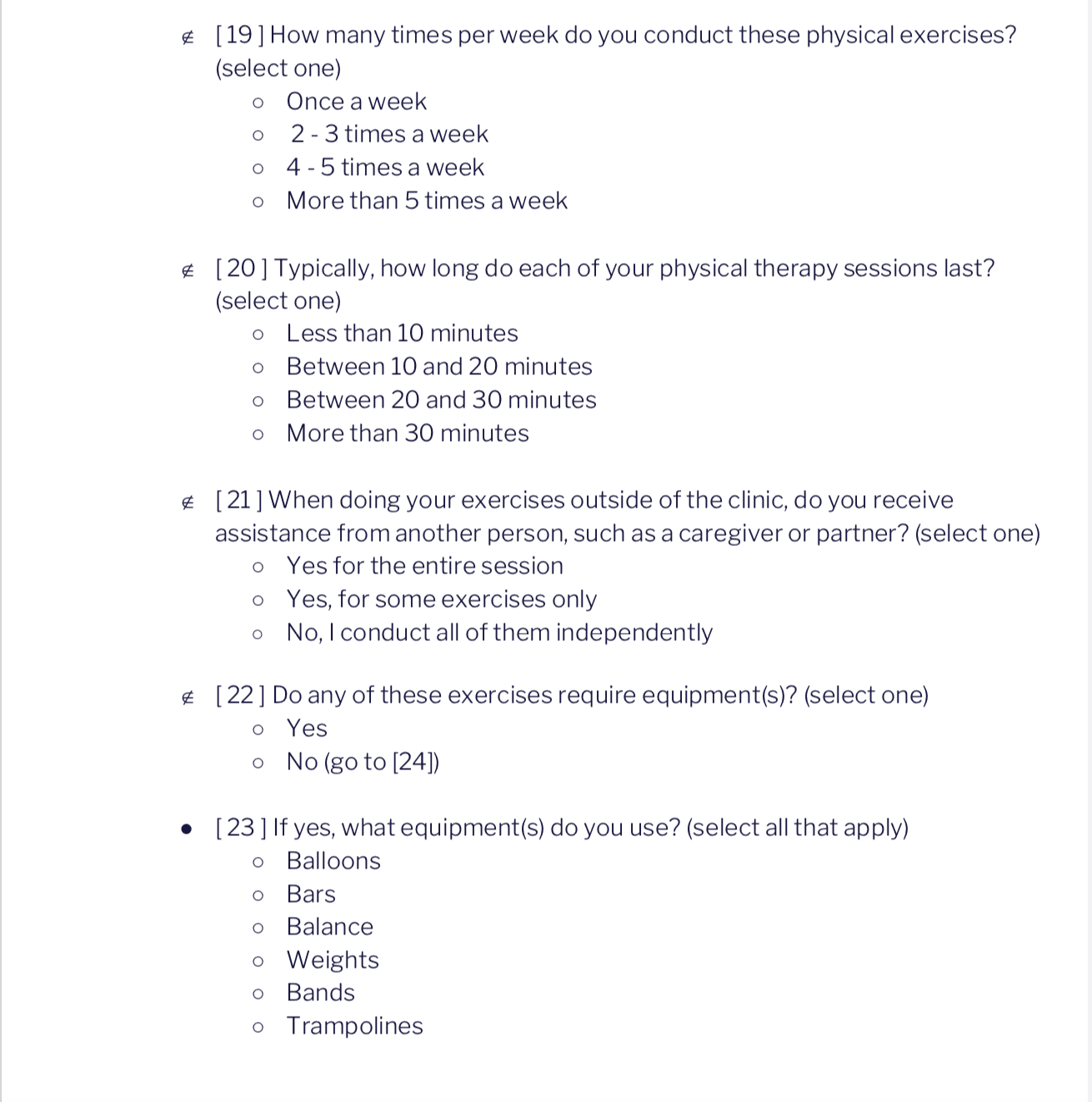
After aligning through focus groups, we launched our own first survey to explore exercise habits and digital behaviors, both crucial for shaping the product experience.
«I cleaned the kitchen and did 3 loads of laundry. That is physical activity for someone in a wheelchair.»

Key insights of the survey
1.
1.
Cut off from the others
~90% of SMA patients lived alone, seeing caregivers one time per day.
2.
2.
Unmet need
The most critical unmet need shared was to maintain and strengthen muscle capacity.
3.
3.
Mobility & devices
~70% of patients use a wheelchair and have a TV device in their living room.
Key insights of the survey
1.
Cut off from the others
~90% of SMA patients lived alone, seeing caregivers one time per day.
2.
Unmet need
The most critical unmet need shared was to maintain and strengthen muscle capacity.
3.
Mobility & devices
~70% of patients use a wheelchair and have a TV device in their living room.
Diary study
To go further in our research, we launched diary studies in collaboration with CureSMA to capture temporal insights in real-life contexts.
The primary objective was to collect detailed data on strength training sessions over a one-month period.
Participants completed entries after each session, noting day and time, with a hybrid diary format: structured closed questions for consistency, complemented by open fields for richer qualitative input.
My mission finished before being able to study the results.


Result of this research process
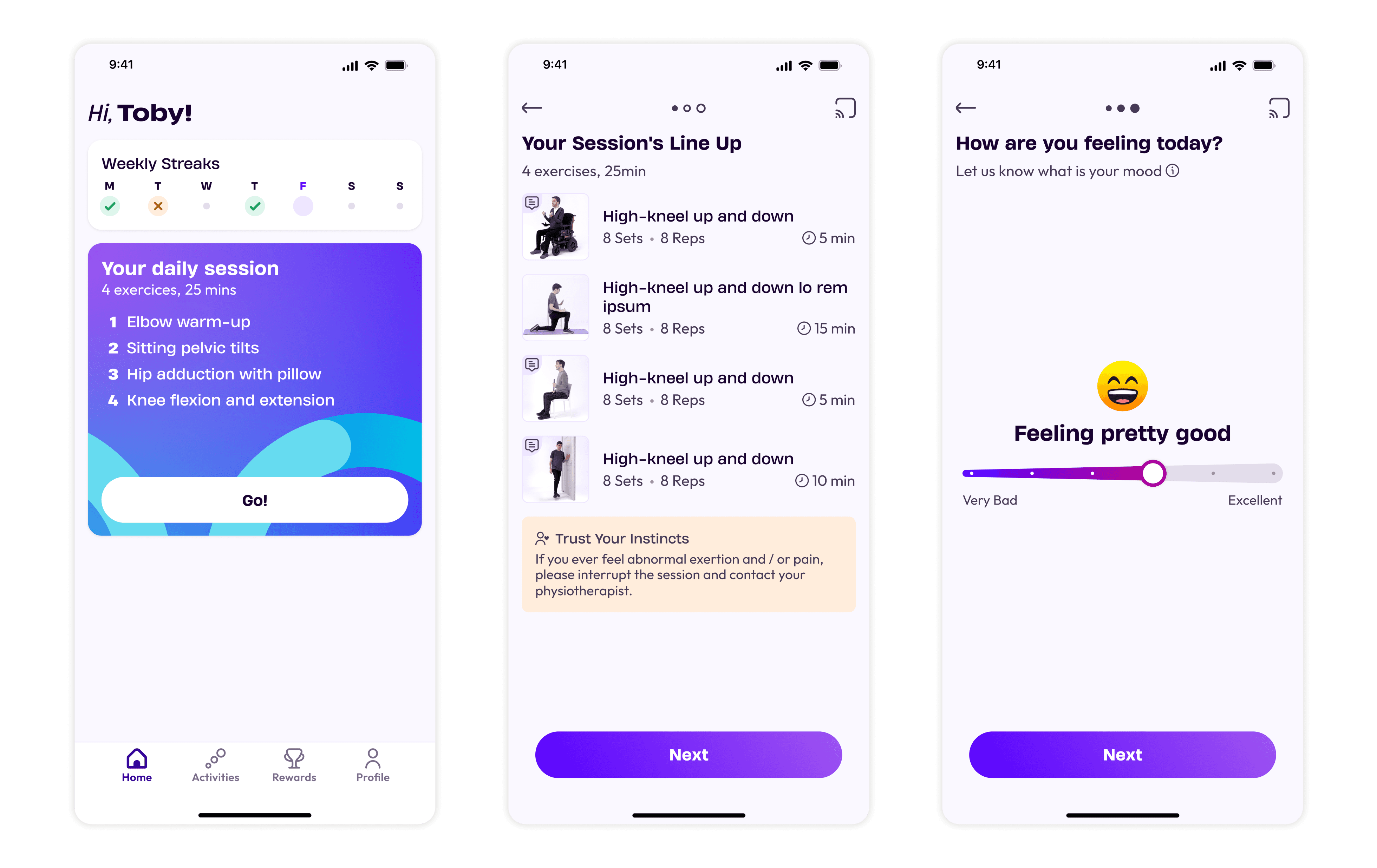
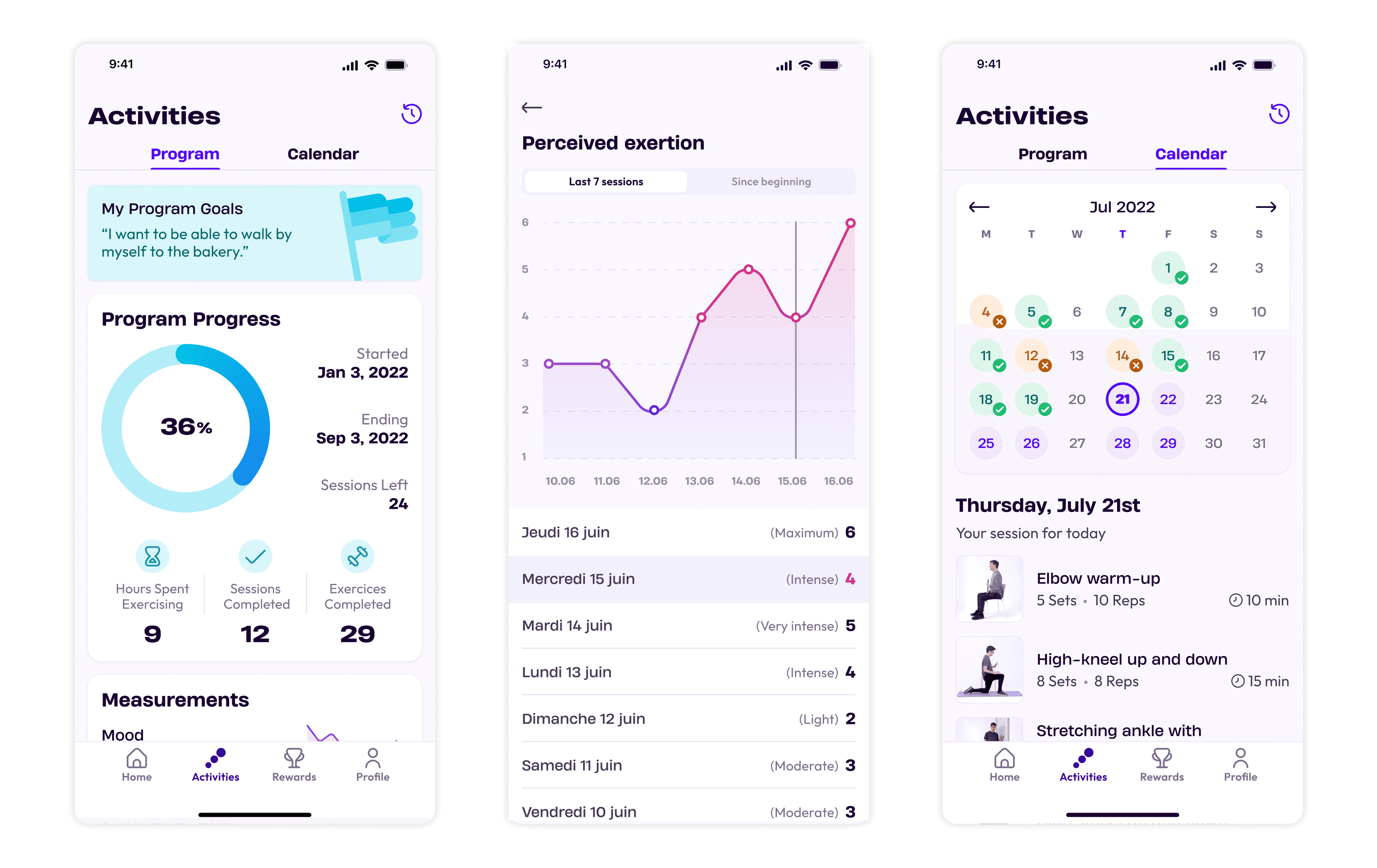
Based on our detailed work, we launched an app proposing exercise sessions designed by physiotherapists, TV-broadcastable that accommodated wheelchair users' living room setups.
Before sessions
Before the session, you get a summarize of what you'll do and the equipment needs if their is.
We tracked various data before and after sessions to show the progress and to give insights to the physiotherapist.


Before sessions
Before the session, you get a summarize of what you'll do and the equipment needs if their is.
We tracked various data before and after sessions to show the progress and to give insights to the physiotherapist.

During sessions
The exercises were launched on smartphone or TV if it accommodates wheelchair users.
They received points and stepped up in their objectives at the end of your session.


During sessions
The exercises were launched on smartphone or TV if it accommodates wheelchair users.
They received points and stepped up in their objectives at the end of your session.

After sessions
An activity section to see the progress. Based on the performance and user needs, the physiotherapist can adjust the program.


After sessions
An activity section to see the progress. Based on the performance and user needs, the physiotherapist can adjust the program.

What did I learn
Impacts on patient’s life
Designing patients is about solving genuine human challenges.
At Biogen, I learned that when design prioritizes patient needs, empathy, and usability, the impact goes beyond numbers.
It improves daily life, builds trust, and creates meaningful experiences that truly matter. I really loved this aspect which gave more sense at my work.
How manage international dimension
Managing the user research of three international products across 17+ countries required advanced planning and strategic prioritization to balance requests and workloads.
I was really happy to work with Wedo Studio to manage the double-blinded policy by conducting the interviews, and for their qualitative deliverables.
Sky is the limit ⭐️
Biogen was my first major experience as a user researcher, and it profoundly shaped my approach. I had the chance to explore atomic research with the intervention of Daniel Pidcock and apply it hands-on.
Special thanks to Melina Angelo, whose guidance and insights on research methods continue to influence my work today.
What did I learn
Impacts on patient’s life
Designing patients is about solving genuine human challenges.
At Biogen, I learned that when design prioritizes patient needs, empathy, and usability, the impact goes beyond numbers.
It improves daily life, builds trust, and creates meaningful experiences that truly matter. I really loved this aspect which gave more sense at my work.
How manage international dimension
Managing the user research of three international products across 17+ countries required advanced planning and strategic prioritization to balance requests and workloads.
I was really happy to work with Wedo Studio to manage the double-blinded policy by conducting the interviews, and for their qualitative deliverables.
Sky is the limit ⭐️
Biogen was my first major experience as a user researcher, and it profoundly shaped my approach. I had the chance to explore atomic research with the intervention of Daniel Pidcock and apply it hands-on.
Special thanks to Melina Angelo, whose guidance and insights on research methods continue to influence my work today.