OUIGO

Discovery process

Discovery process

About this project

OUIGO, France’s leading low-cost train company, partnered with UX Republic to rethink key parts of its customer experience and strengthen its design system.

I was brought in as the sole UX/UI designer to lead two high-impact initiatives for the Spanish market:

  1. Package Redesign: adapting offers to attract business, SME, and premium leisure travelers while staying relevant to group customers.

  2. Flex per Pax: rethinking booking flows so passengers in group reservations could change tickets individually.

For this use case, I'll only show the package redesign.

Some content is shown to provide context while respecting company privacy. If you want to know more about a specific part, I'll glad to talk about it in interview.

Client

OUIGO

Industry

Train transport

Year

2022

Role

Product designer

About this project

OUIGO, France’s leading low-cost train company, partnered with UX Republic to rethink key parts of its customer experience and strengthen its design system.

I was brought in as the sole UX/UI designer to lead two high-impact initiatives for the Spanish market:

  1. Package Redesign: adapting offers to attract business, SME, and premium leisure travelers while staying relevant to group customers.

  2. Flex per Pax: rethinking booking flows so passengers in group reservations could change tickets individually.

For this use case, I'll only show the package redesign.

Some content is shown to provide context while respecting company privacy. If you want to know more about a specific part, I'll glad to talk about it in interview.

Client

OUIGO

Industry

Train transport

Year

2022

Role

Product designer

New market, new customers

OUIGO Spain aimed to broaden its market reach by addressing the needs of business travelers, SMEs, and premium leisure customers, who expect greater flexibility and customization, without sacrificing its main target: the group travelers looking for cheap price.

Discovery discipline method

Apply a discovery process

It helps to secure what we want to push and align the stakeholders while minimizing negative impacts.

7 steps, 7 deliverables

The F.O.C.U.S.E.D. framework represent the whole exploration process to make an effective discovery.

Each step is following by a deliverable to summarize what we’ve done.

A tool for PM

Designed for product managers, it emphasizes a strategic mindset over pure UX practice.

Its simplicity makes it easy to understand and apply, focusing on product strategy rather than design execution.

Framework's steps

Define the project’s ambition

This first step focused on defining the project’s ambition and aligning stakeholders around a clear objective.

Define the project’s ambition

This first step focused on defining the project’s ambition and aligning stakeholders around a clear objective.

Frame

Define the project’s ambition

Frame

Define the project’s ambition

Frame

Define the project’s ambition

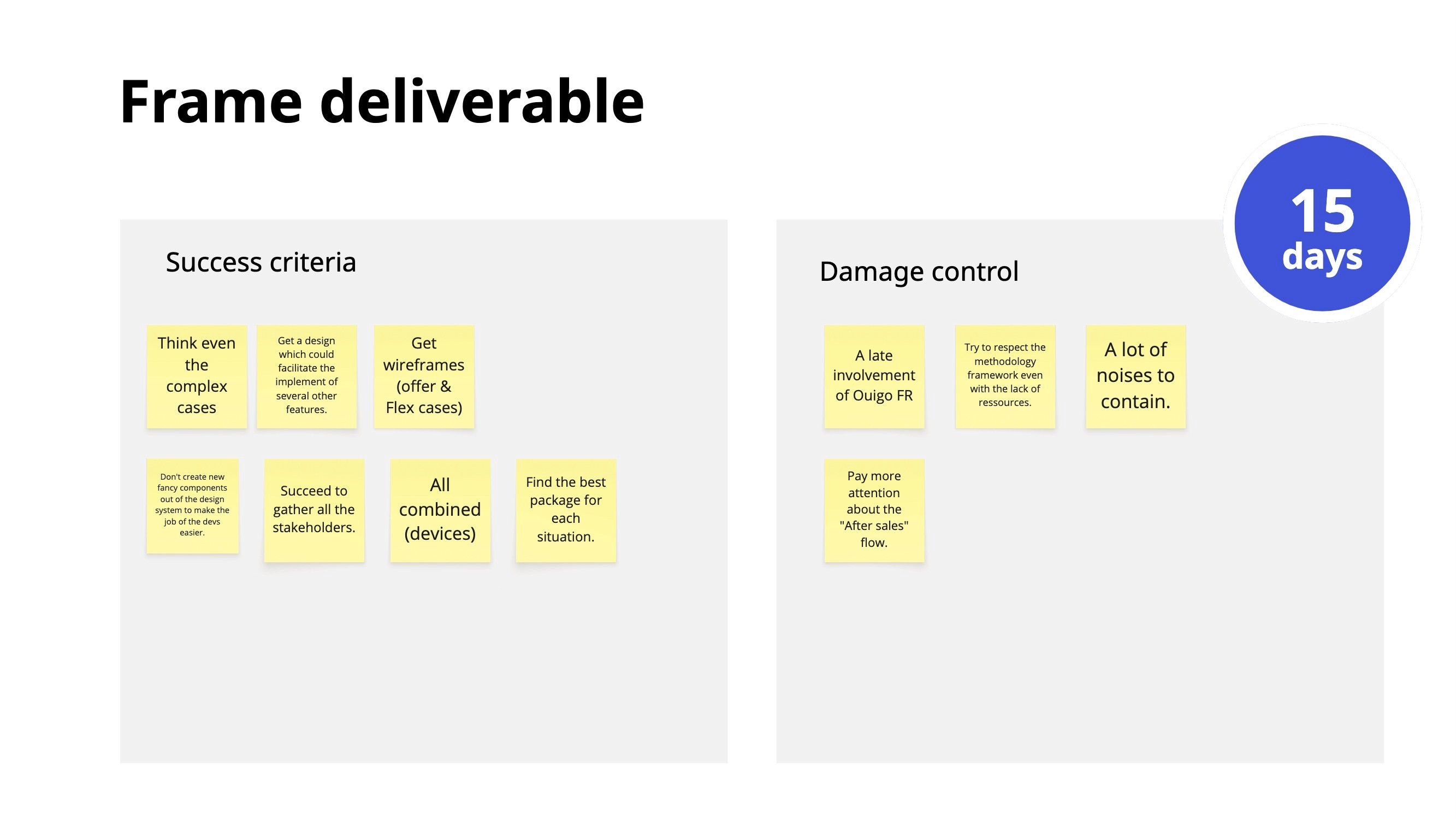
Project Ambition workshop

This activity outline success indicators, potential risks, and the time we could realistically dedicate for the project.

Goal: eliminate secondary concerns and ensure everyone shared the same vision from the start.
Key outcome

Their priority was straightforward: minimize friction all along the project and deploy quickly. While the agreements were only partial, they provided enough direction to set expectations and structure the upcoming stages within the tight schedule.

Observe

Identify the main use case

Observe

Identify the main use case

Observe

Identify the main use case

Proto-persona workshop

With a restrained schedule and limited resources, I chose to anchor the workshop around proto-personas instead of qualitative interviews, or observational studies.

Yet, that approach was pragmatic because it allowed us to have a starting point while highlighting patterns, and map potential use cases without delaying the process.
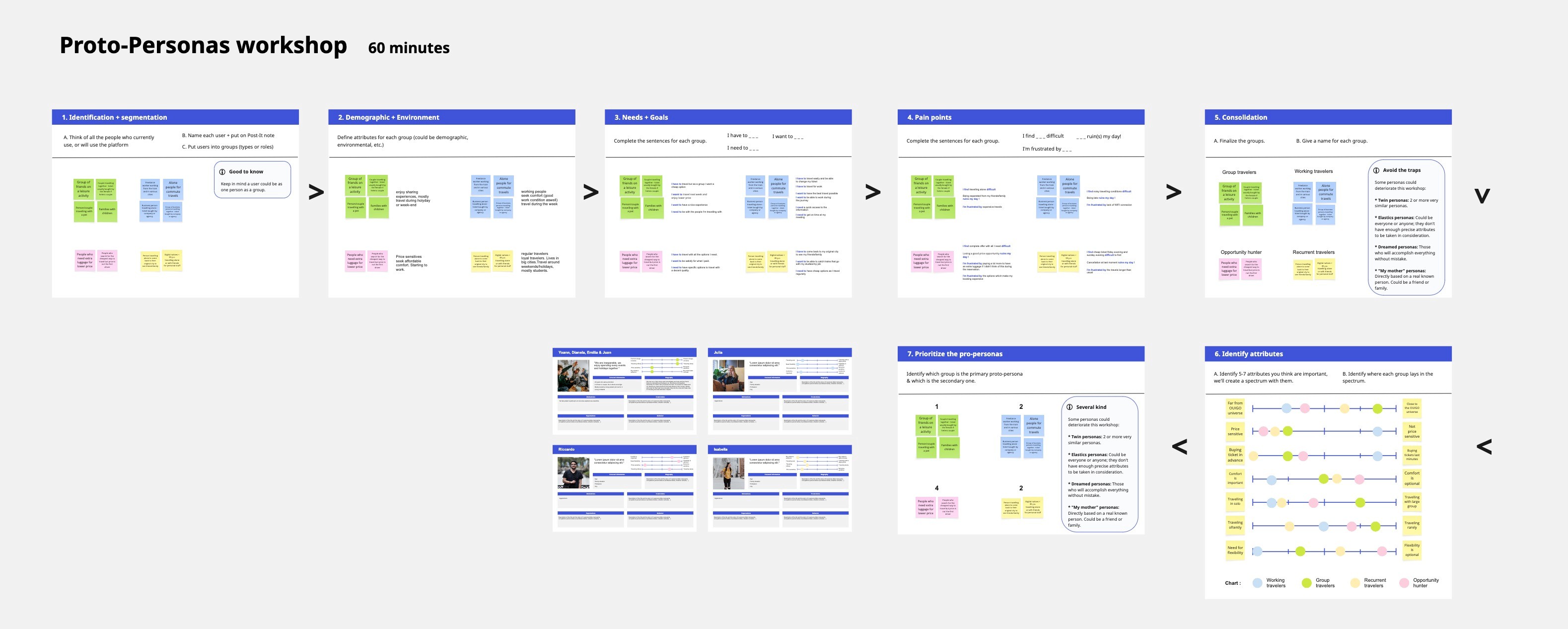
It created a shared foundation that the team could build on in subsequent stages of the redesign.

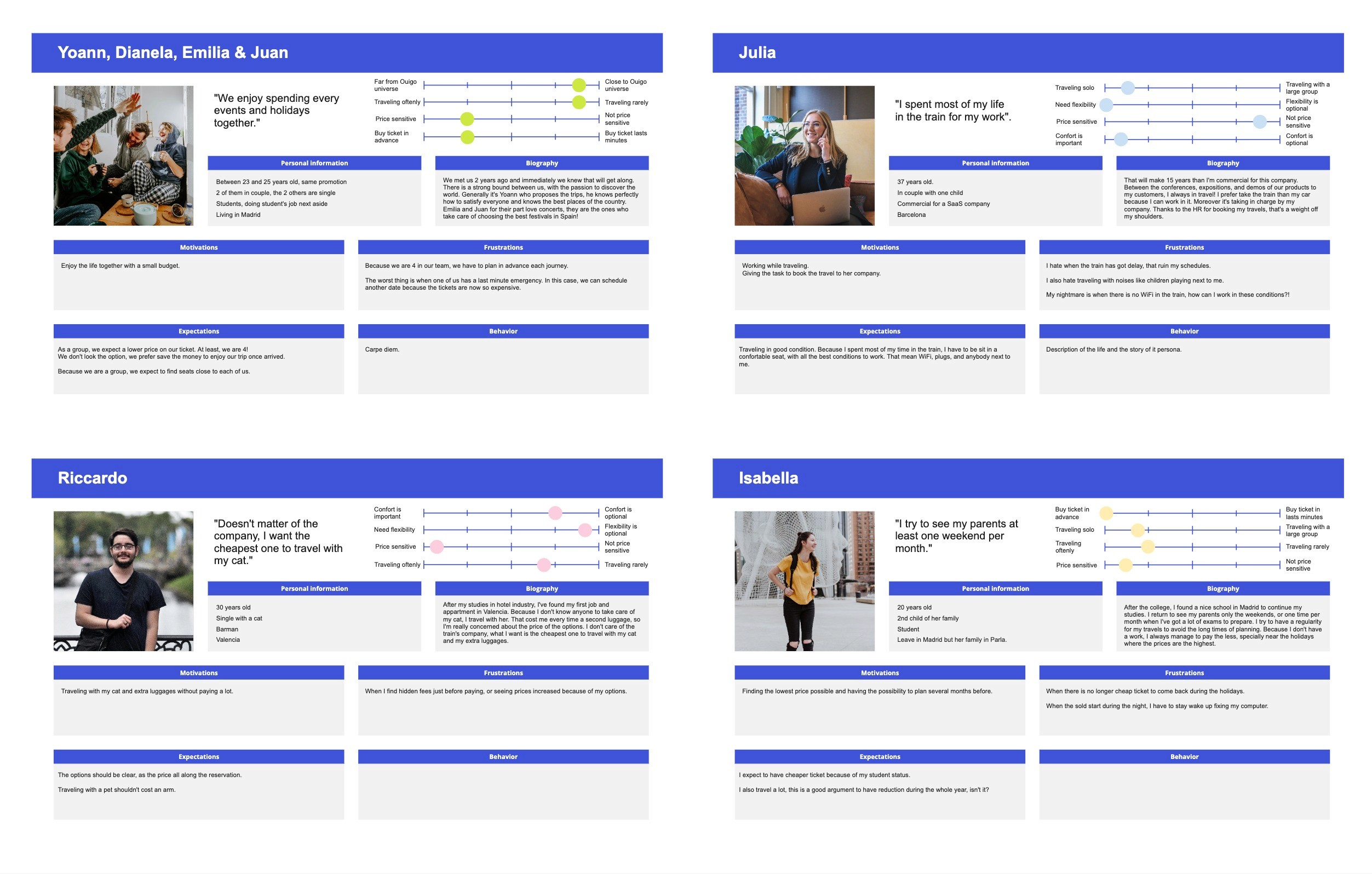
Personas scaled in 7 steps

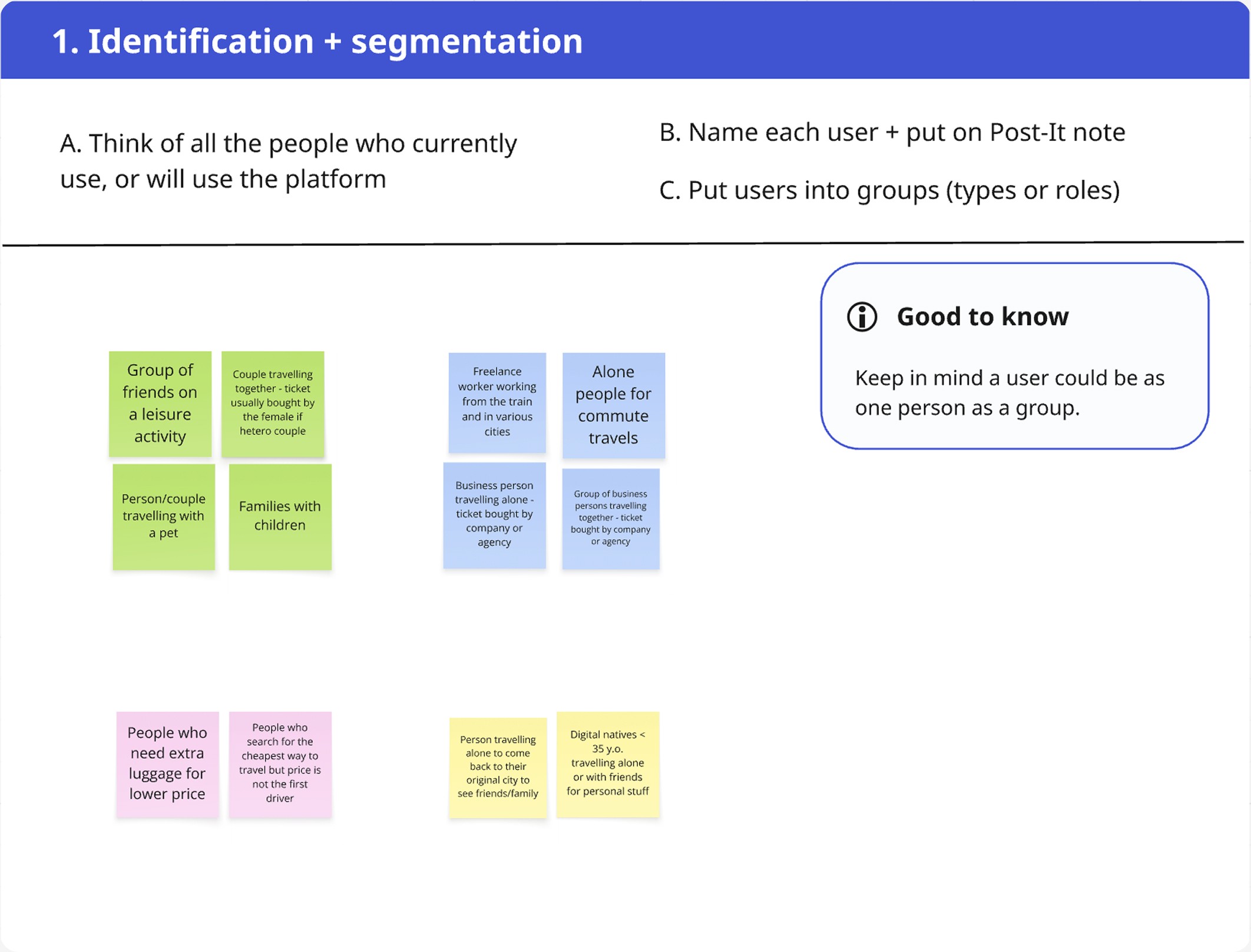
1. Identification & Segmentation

Listing existing customer typologies then making groups into broad categories. It highlights specific traits and differences.

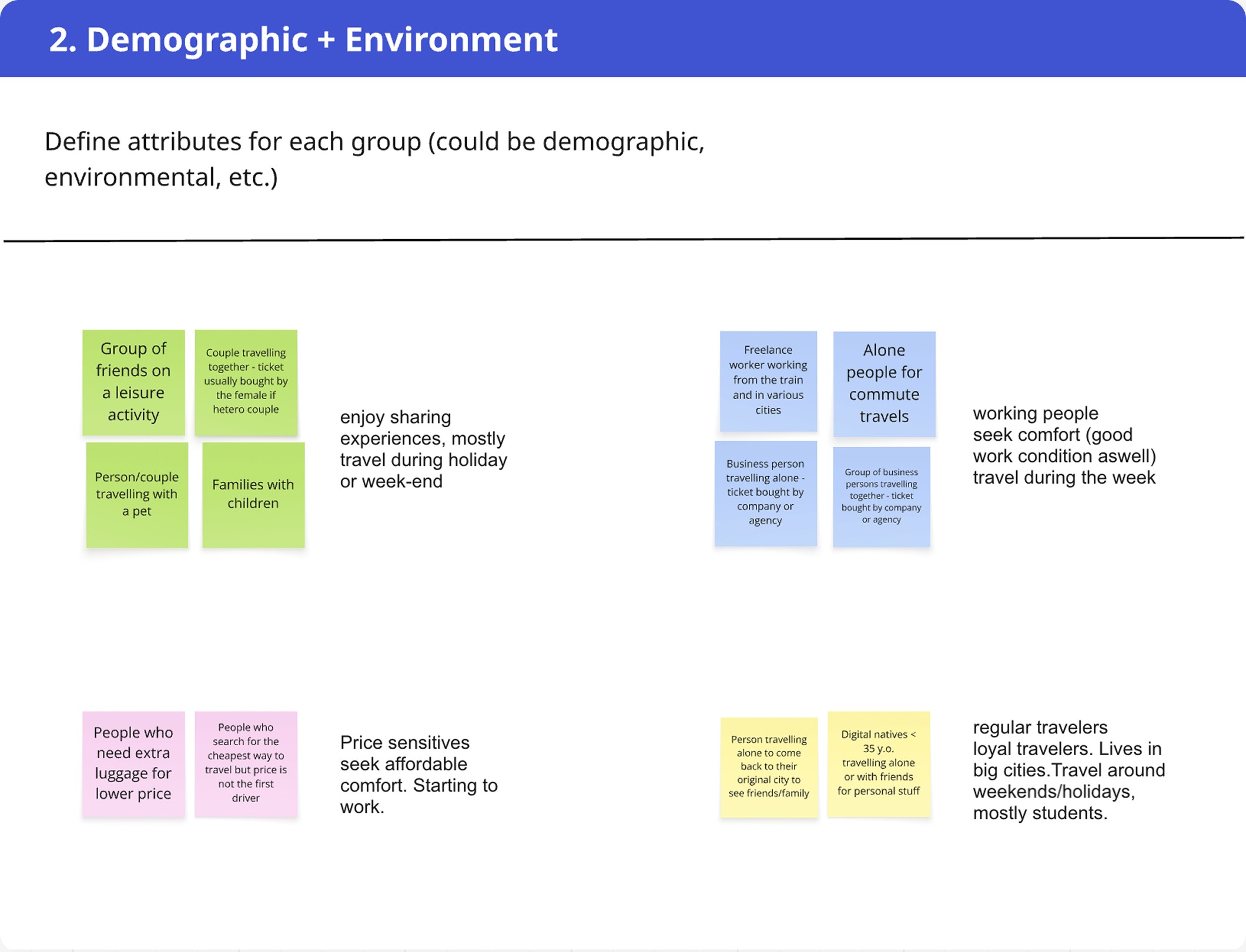
2. Demographics & Environment

Participants outlined the socio-demographic context of each group. Though naturally bias, this step gave everyone a clearer view of how different users might behave and what shaped their expectations.

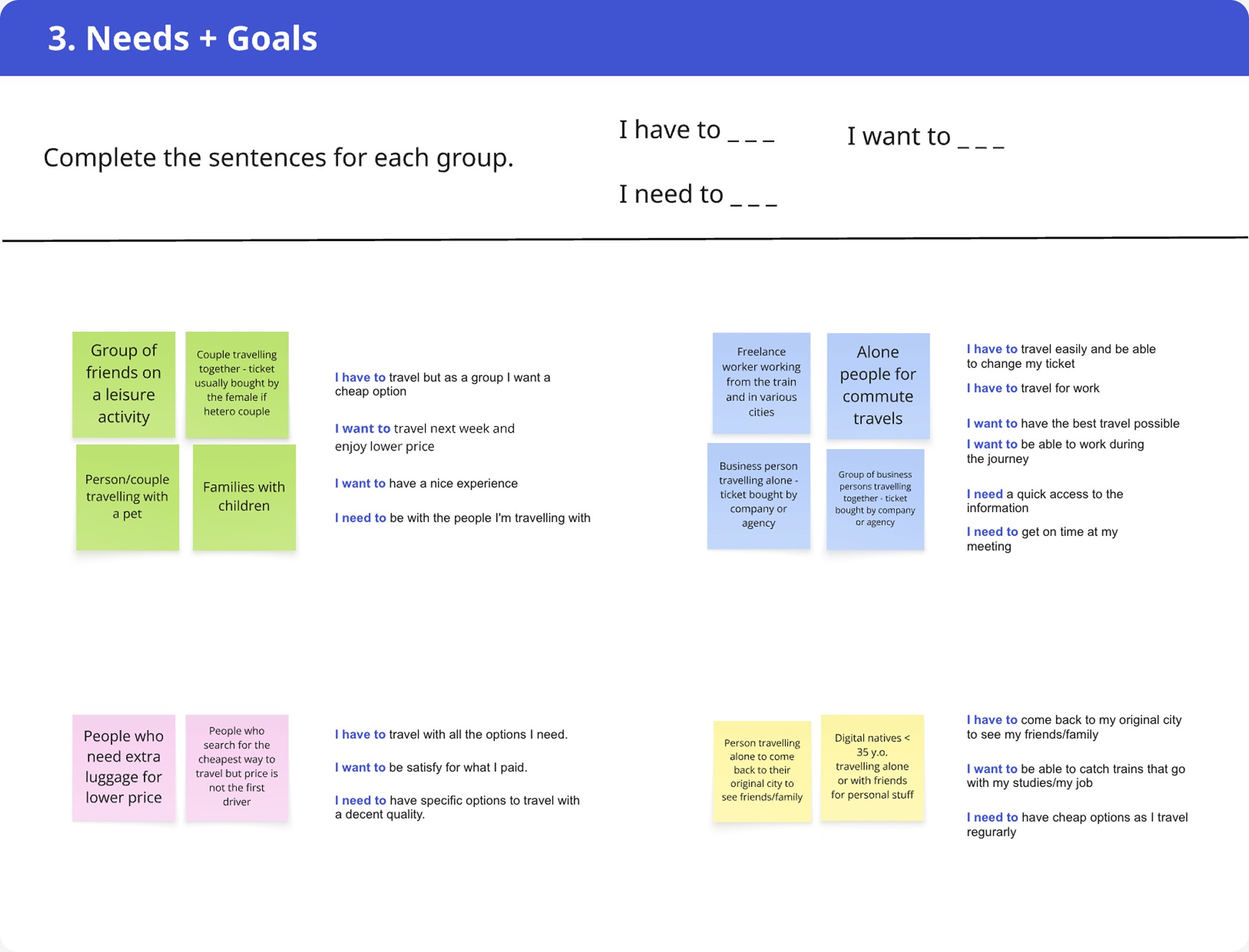
3. Needs & Goals

To encouraged stakeholders to think in terms of user intent, I used a simple cloze test exercise: “I have to ___, I want to ___, I need to ___.” . It revealed early insights into potential use cases.

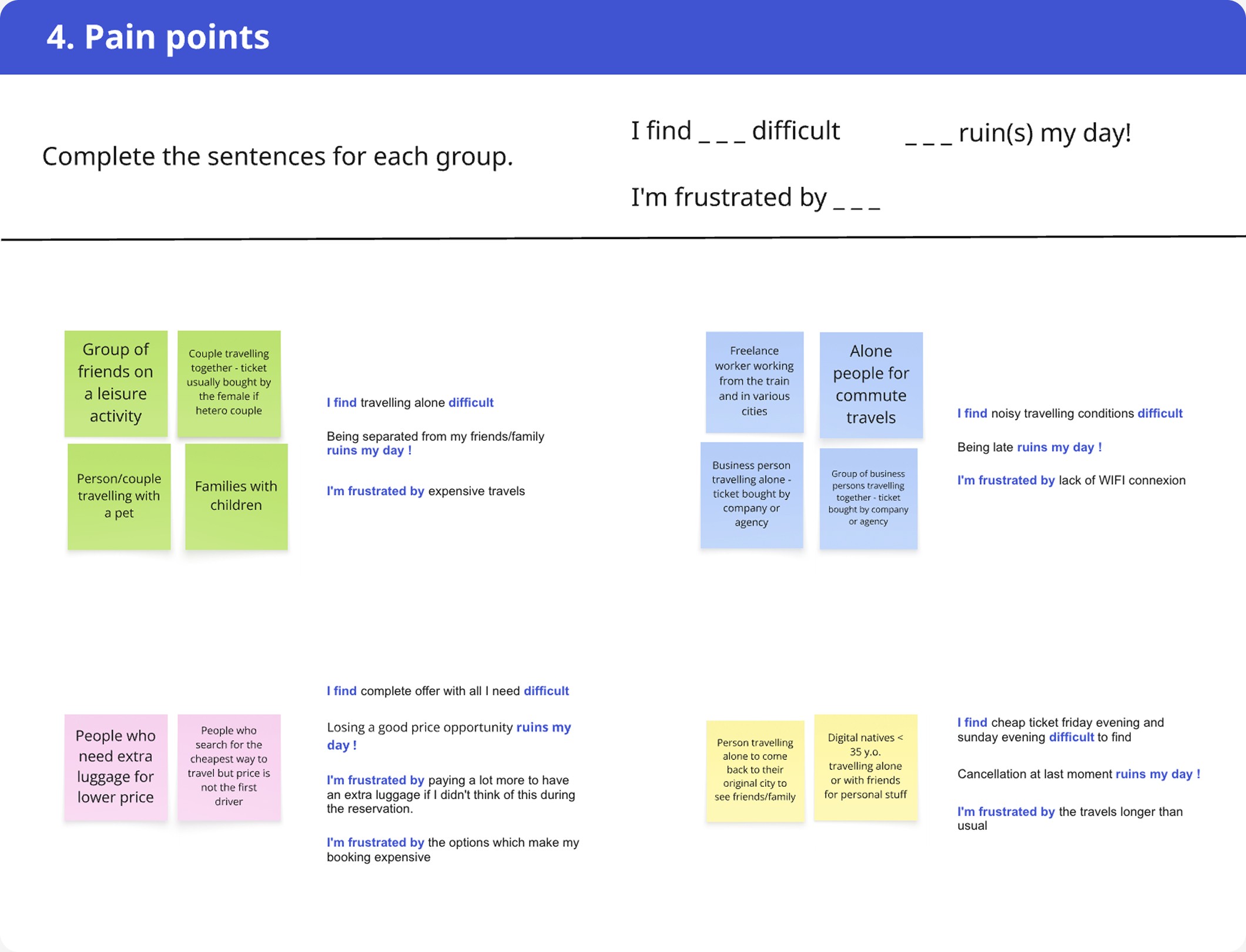
4. Pain points

Same exercise with: “I find ___ difficult, ___ ruin(s) my day, I’m frustrated when/by ___.”.

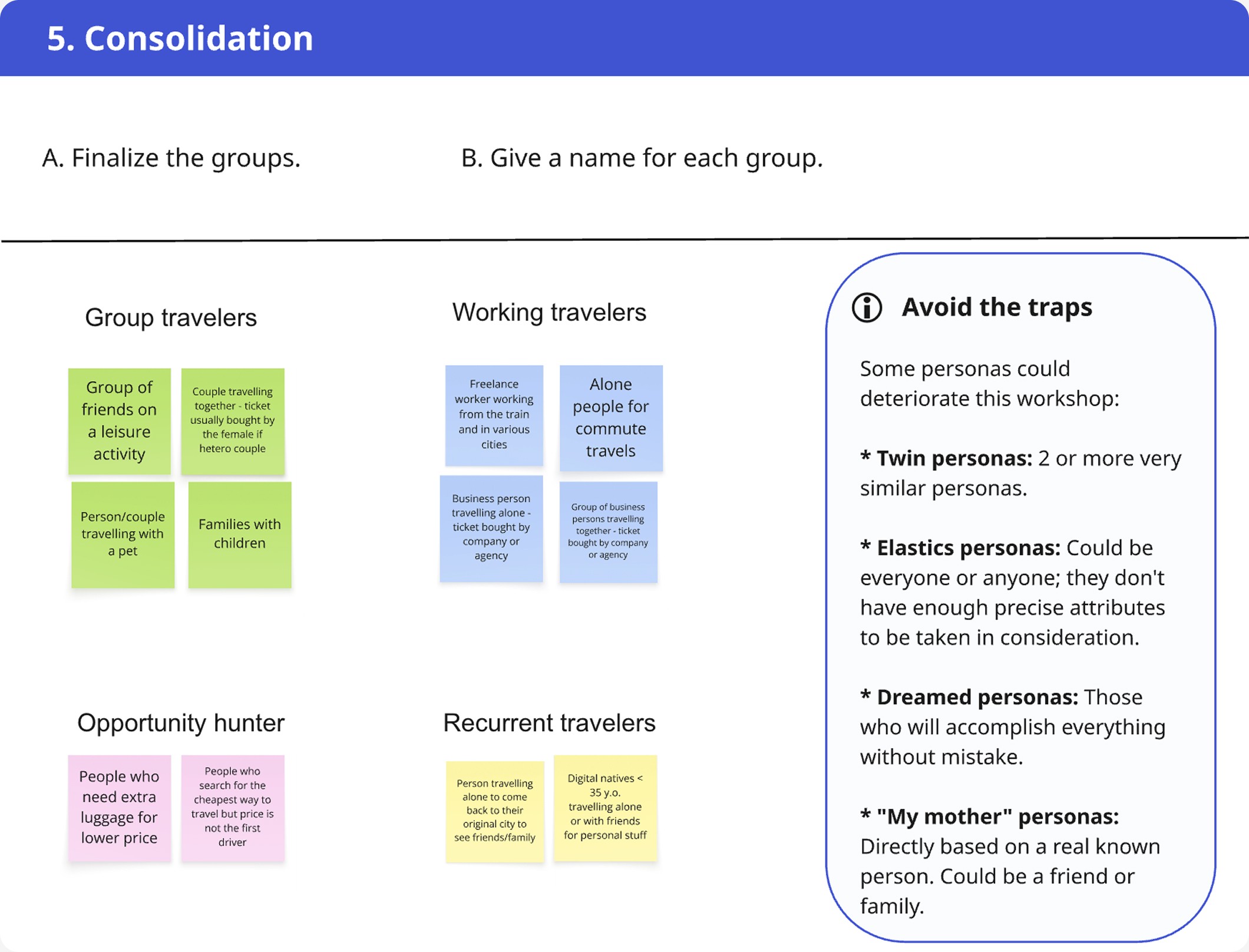
5. Consolidation

Quick check to validate the groups found and ensure alignment. Assignation of names to give them more personality and memorability.

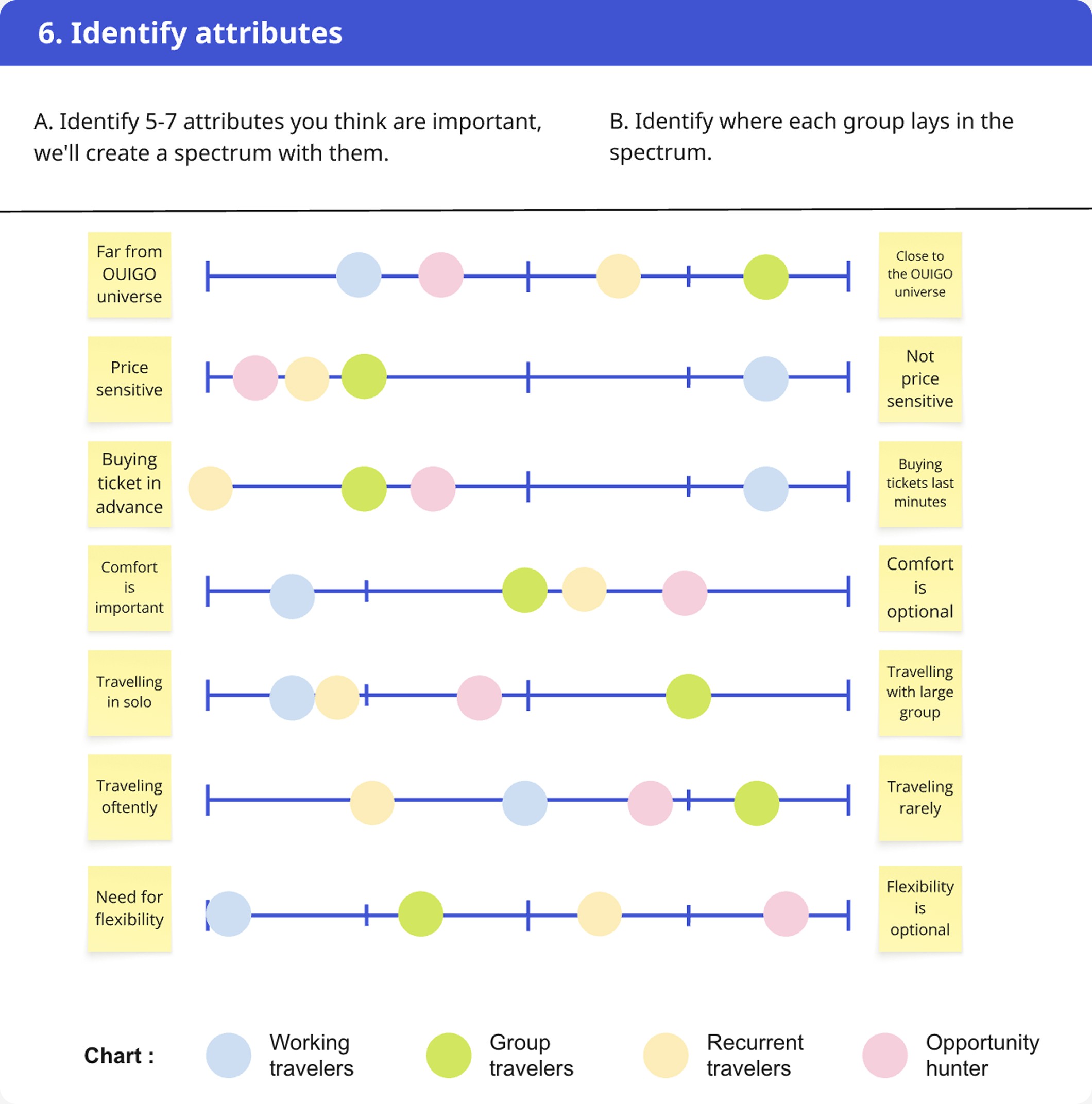
6. Identify Attributes

With market knowledge, I asked participants to define 5–7 attributes to build a spectrum analysis. This spectrum helped to visualize where each proto-persona stood relative to the others.

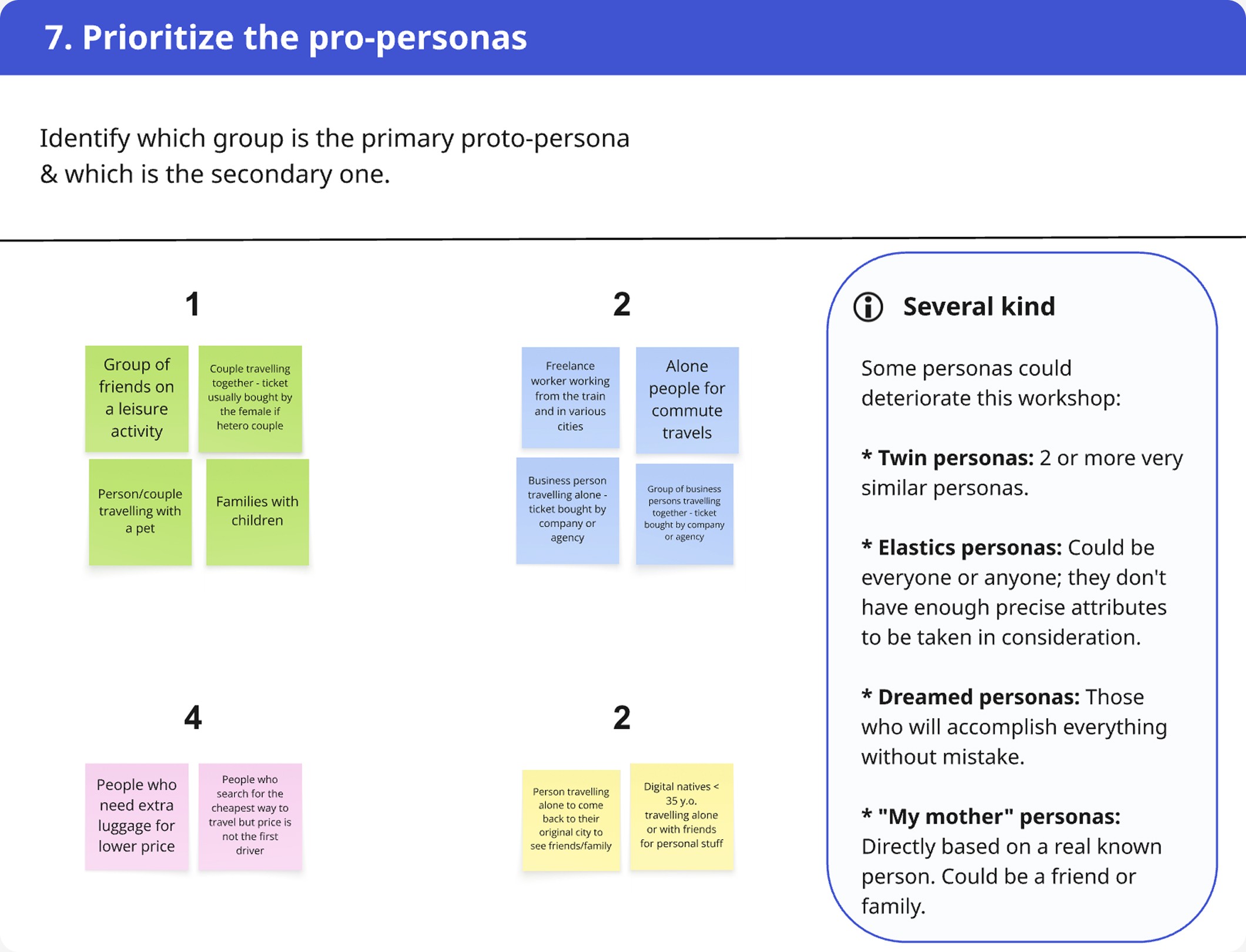
7. Prioritization

To add a video to your site, click the “Insert” button and navigate to the “Media” section. Then, drag and drop a video component onto the Canvas.

1. Identification & Segmentation

Listing existing customer typologies then making groups into broad categories. It highlights specific traits and differences.

2. Demographics & Environment

Participants outlined the socio-demographic context of each group. Though naturally bias, this step gave everyone a clearer view of how different users might behave and what shaped their expectations.

3. Needs & Goals

To encouraged stakeholders to think in terms of user intent, I used a simple cloze test exercise: “I have to ___, I want to ___, I need to ___.” . It revealed early insights into potential use cases.

4. Pain points

Same exercise with: “I find ___ difficult, ___ ruin(s) my day, I’m frustrated when/by ___.”.

5. Consolidation

Quick check to validate the groups found and ensure alignment. Assignation of names to give them more personality and memorability.

6. Identify Attributes

With market knowledge, I asked participants to define 5–7 attributes to build a spectrum analysis. This spectrum helped to visualize where each proto-persona stood relative to the others.

7. Prioritization

To add a video to your site, click the “Insert” button and navigate to the “Media” section. Then, drag and drop a video component onto the Canvas.

1. Identification & Segmentation

Listing existing customer typologies then making groups into broad categories. It highlights specific traits and differences.

2. Demographics & Environment

Participants outlined the socio-demographic context of each group. Though naturally bias, this step gave everyone a clearer view of how different users might behave and what shaped their expectations.

3. Needs & Goals

To encouraged stakeholders to think in terms of user intent, I used a simple cloze test exercise: “I have to ___, I want to ___, I need to ___.” . It revealed early insights into potential use cases.

4. Pain points

Same exercise with: “I find ___ difficult, ___ ruin(s) my day, I’m frustrated when/by ___.”.

5. Consolidation

Quick check to validate the groups found and ensure alignment. Assignation of names to give them more personality and memorability.

6. Identify Attributes

With market knowledge, I asked participants to define 5–7 attributes to build a spectrum analysis. This spectrum helped to visualize where each proto-persona stood relative to the others.

7. Prioritization

To add a video to your site, click the “Insert” button and navigate to the “Media” section. Then, drag and drop a video component onto the Canvas.

Key outcomes

All of those audiences have got their own interest like the price of the reservations, the comfort provided by the options, and the brand universe.

4 distinct targets audience
Group travelers

Friends and families who enjoy sharing experiences and travel mostly during holidays or week-end sometimes.

Working travelers

Freelance worker and business persons, working during the travel in good conditions.

Opportunity hunter

Customers whom doesn’t pay attention of the brand effort but the price.

Recurrent travelers

Travelers who take the train regularly to go work or return to their family for students case.

Key insight

The attribute’s spectrum offers several layers of reading, which is vital to take strategic decisions further.

Claim

Imagine a narrative positioning

Claim

Imagine a narrative positioning

Claim

Imagine a narrative positioning

Launch tweet workshop

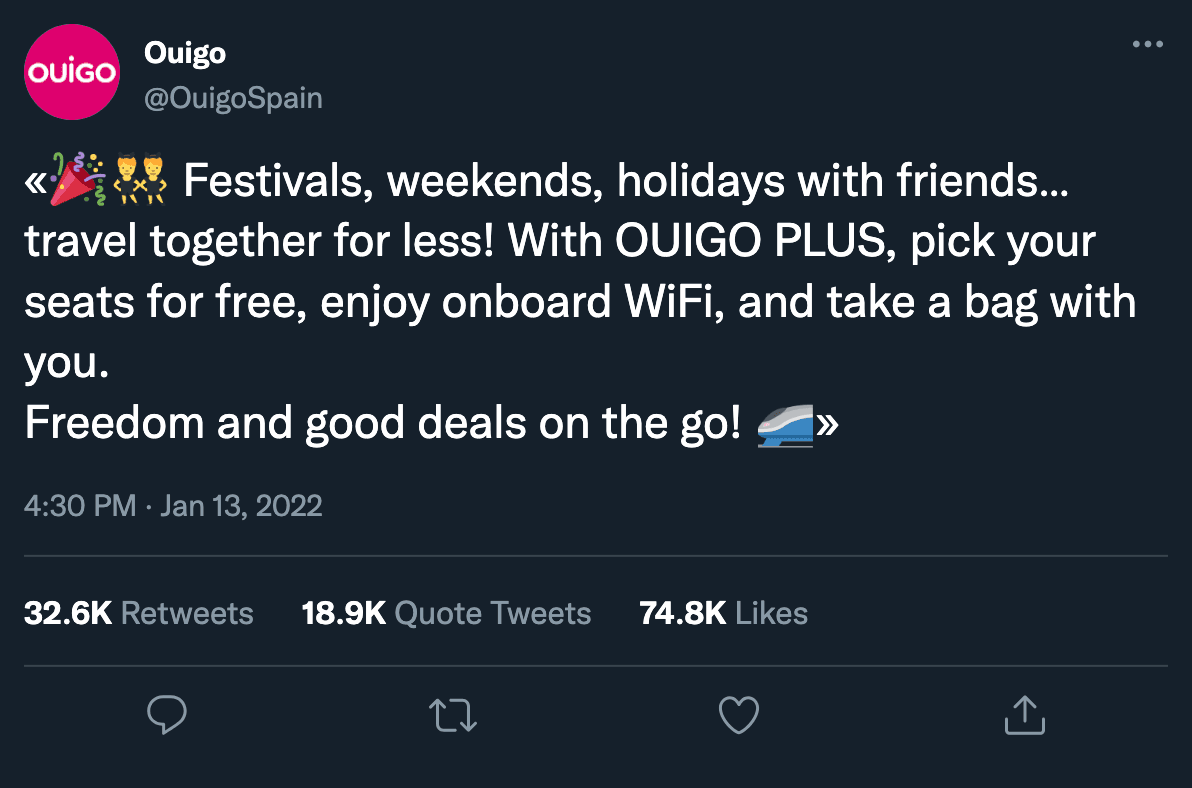
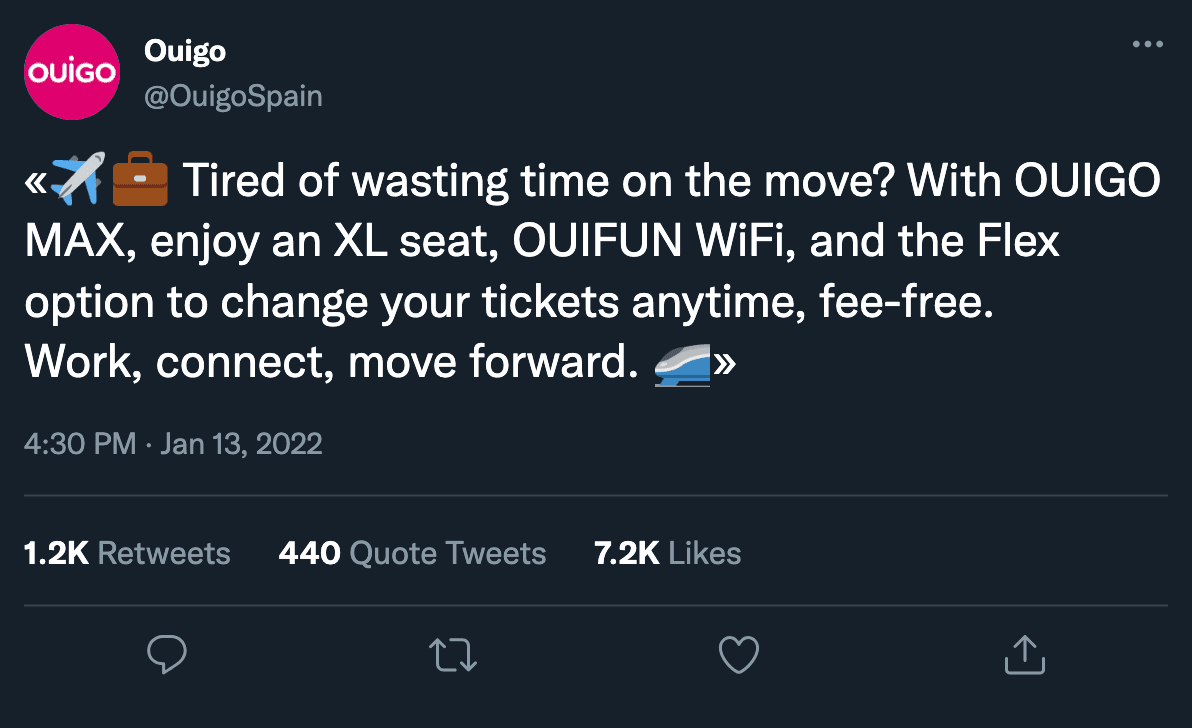
This workshop is a simple yet powerful activity where the team had to summarize the new offering in under 280 characters. The brevity forced focus, pushing the group to distill the essence of the redesign into a single, compelling message.

Goal: anchored the team and redact an early marketing pitch that stakeholders could rally around.
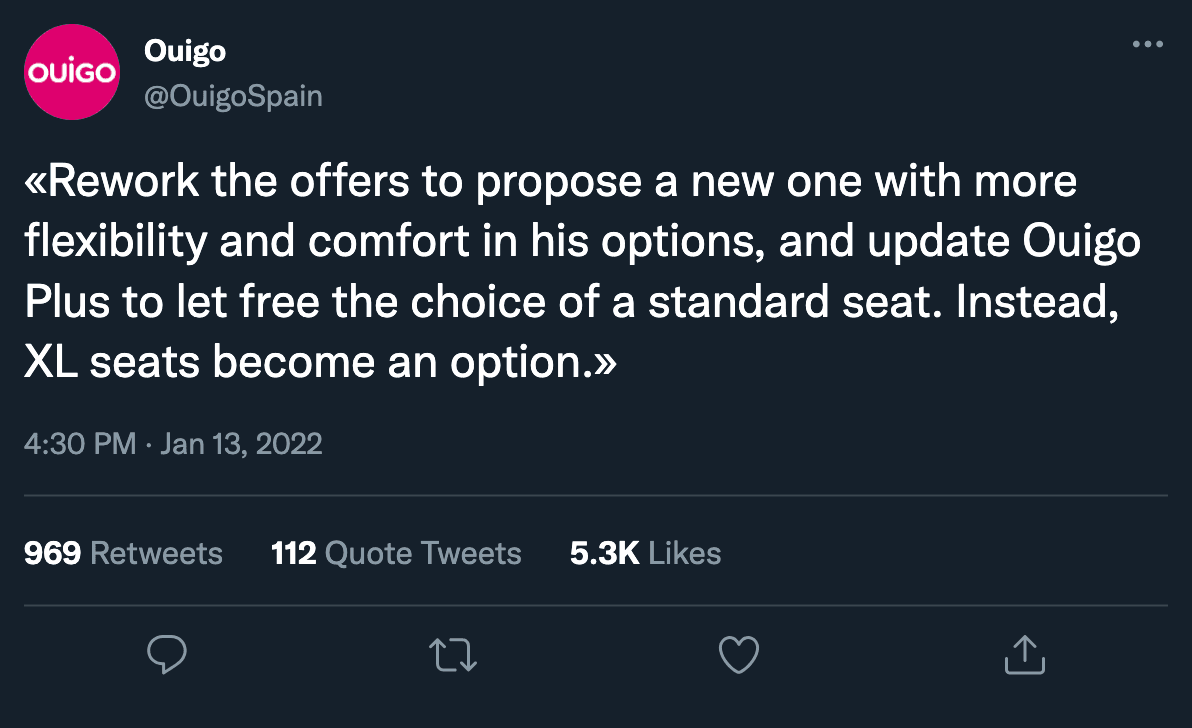
A nice look & feel to visualize the result of their effort !

Final result

Group travelers target

Working travelers target

Outcomes

Because the main objective was light and already known since the brief, the impact on this deliverable was minor. Also, because I was in charge of the mockups, the most important was for me to clearly identify the top priorities of the customers. Those priorities were to show price range for group traveler, and have a clear list of the options for the business persons.

Unfold

Choose the key moment of the experience

Unfold

Choose the key moment of the experience

Unfold

Choose the key moment of the experience

User journey workshop

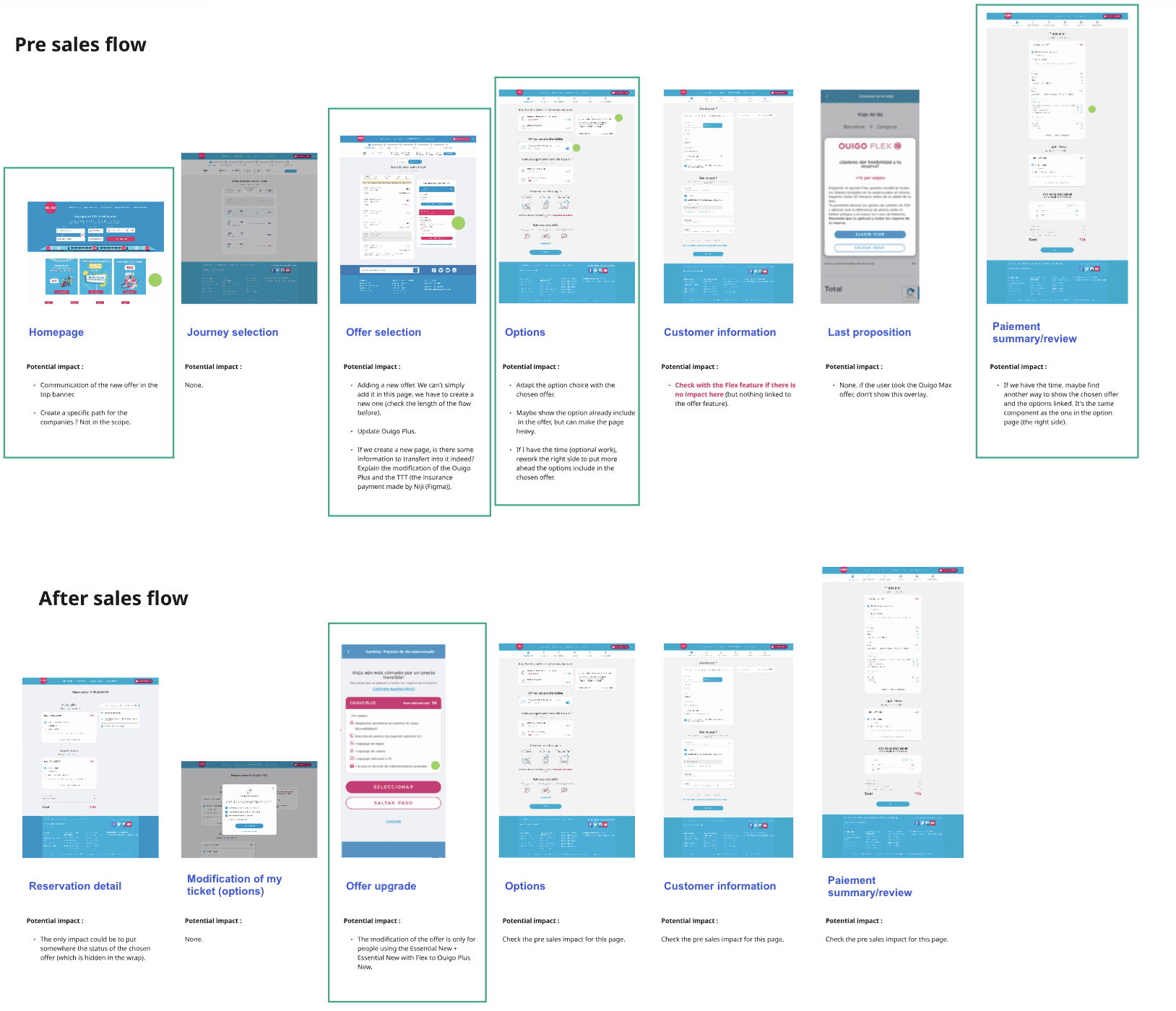
While this step can easily expand too broadly, we narrowed it to two key journeys:
pre-sales & after-sales.

To support this work, I introduced a new deliverable for the company: user journeys. Though incomplete due to limited user data, they provided a first visual framework to spot opportunities and guide design.

We selected two proto-personas, working travelers and group travelers, and I split stakeholders into teams to map each persona’s ticket-purchase journey. Afterward, both groups reviewed and enriched each other’s work through open discussion.

A nice look & feel deliverable always help the stakeholders to see the result of their effort !

Best practice findings

The real value of this workshop emerged during the impact identification exercise. Step by step, we mapped where the new offering would affect the user journey, creating the workshop’s true deliverable: a clear, actionable view of where design interventions were needed, without the burden of unnecessary documentation.

Outcomes

One key finding was the challenge of fitting a third offer into the existing layout. To address this, we designed an additional page between time selection and options, providing both space efficiency and a clearer overview of what each offer included. Other impacts were tied to content consistency, such as how offers would display at payment and post-purchase stages, and to adjustments in push marketing placements.

Steal

Reuse existing solutions

Steal

Reuse existing solutions

Steal

Reuse existing solutions

Benchmark workshop

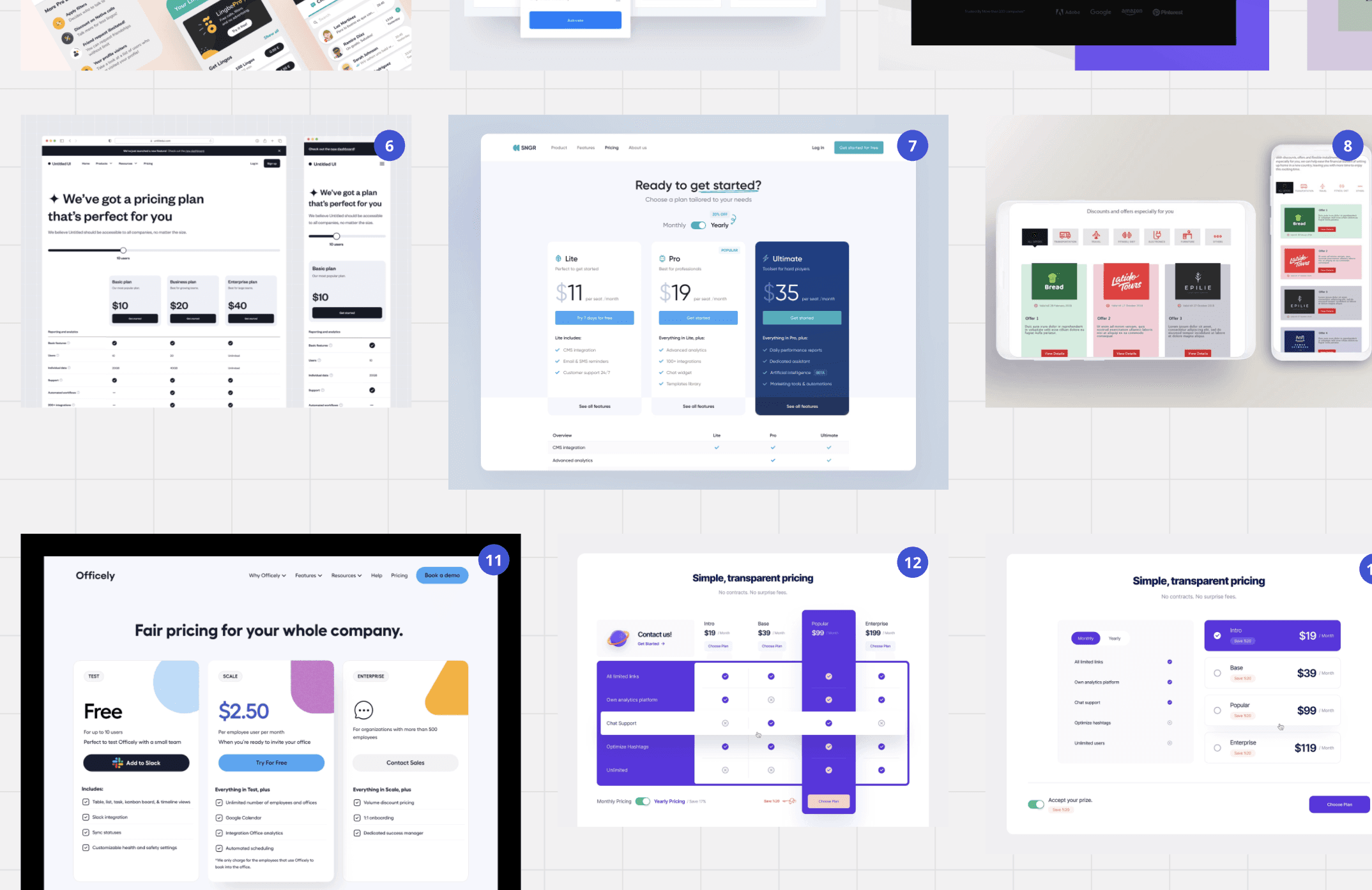
This step followed the principle of a benchmark, exploring both direct competitors and inspiring solutions from other industries. Looking beyond the company’s market was key, as standout patterns often come from companies that have turned them into strengths, like Airbnb’s branding or Spotify’s annual reviews.

The activity focused on analyzing how competitors display prices, while also drawing from adjacent sectors such as telecoms and low-cost airlines, which similarly rely on tiered pricing models. This exercise highlighted strengths and weaknesses across different approaches, helping us define a clear path forward.

A nice look & feel deliverable always help the stakeholders to see the result of their effort !

Best practice findings

Ultimately, the benchmark guided us to a simple rule: avoid overloading offers with optional content. Instead, each offer should emphasize three essentials: the name, the price, and the included options. This minimum requirement ensured clarity without sacrificing value.

Execute

Build a working version

Execute

Build a working version

Execute

Build a working version

Quick actionable prototypes

The next step was to translate all the upstream work into mockups and prototypes. Guided by our proto-personas, the design needed to emphasize price clarity for Group Travelers while offering clear visibility of premium options for Working Travelers, who value comfort and productivity on the move.

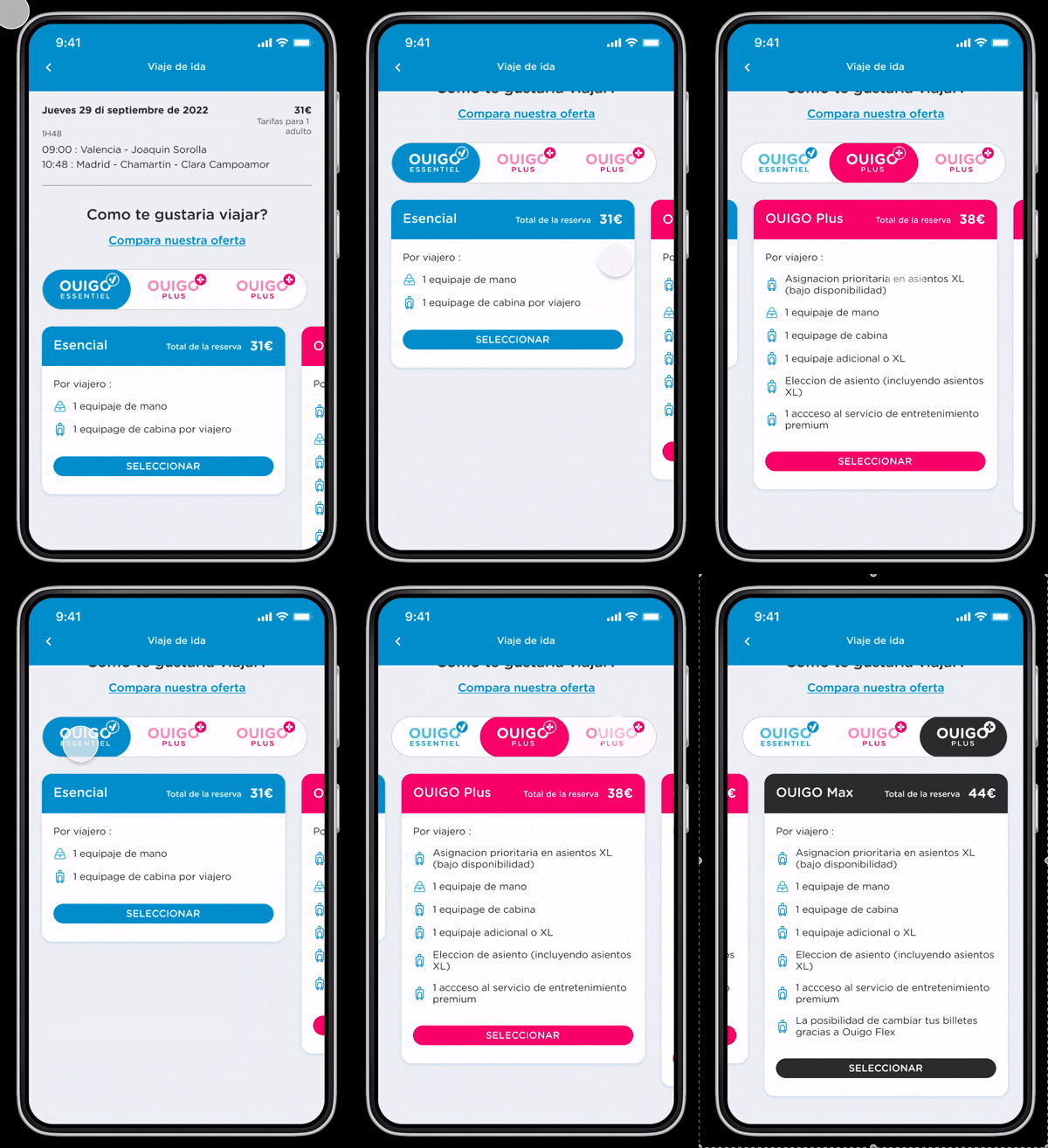
Adopting a mobile-first approach, I proposed a tabbed navigation system for quick offer comparisons without endless scrolling. This solution gave Working Travelers a clear overview while making it easier for Group Travelers to spot the most affordable option.

Best practice findings

This first draft using tabs was already highly appreciated, but early feedback revealed a flaw: users who started with the lowest offer couldn’t easily see what higher tiers included. To address this, I expanded the cards and harmonized the layouts across offers. While this strategy highlighted upsell opportunities, it also increased cognitive load, something to monitor closely through user testing and analytics.

To support these changes, I removed swiping interactions in favor of a full-width content, integrated pricing directly into the offer titles, and optimized space by embedding the tabs inside the cards.

Best practice findings

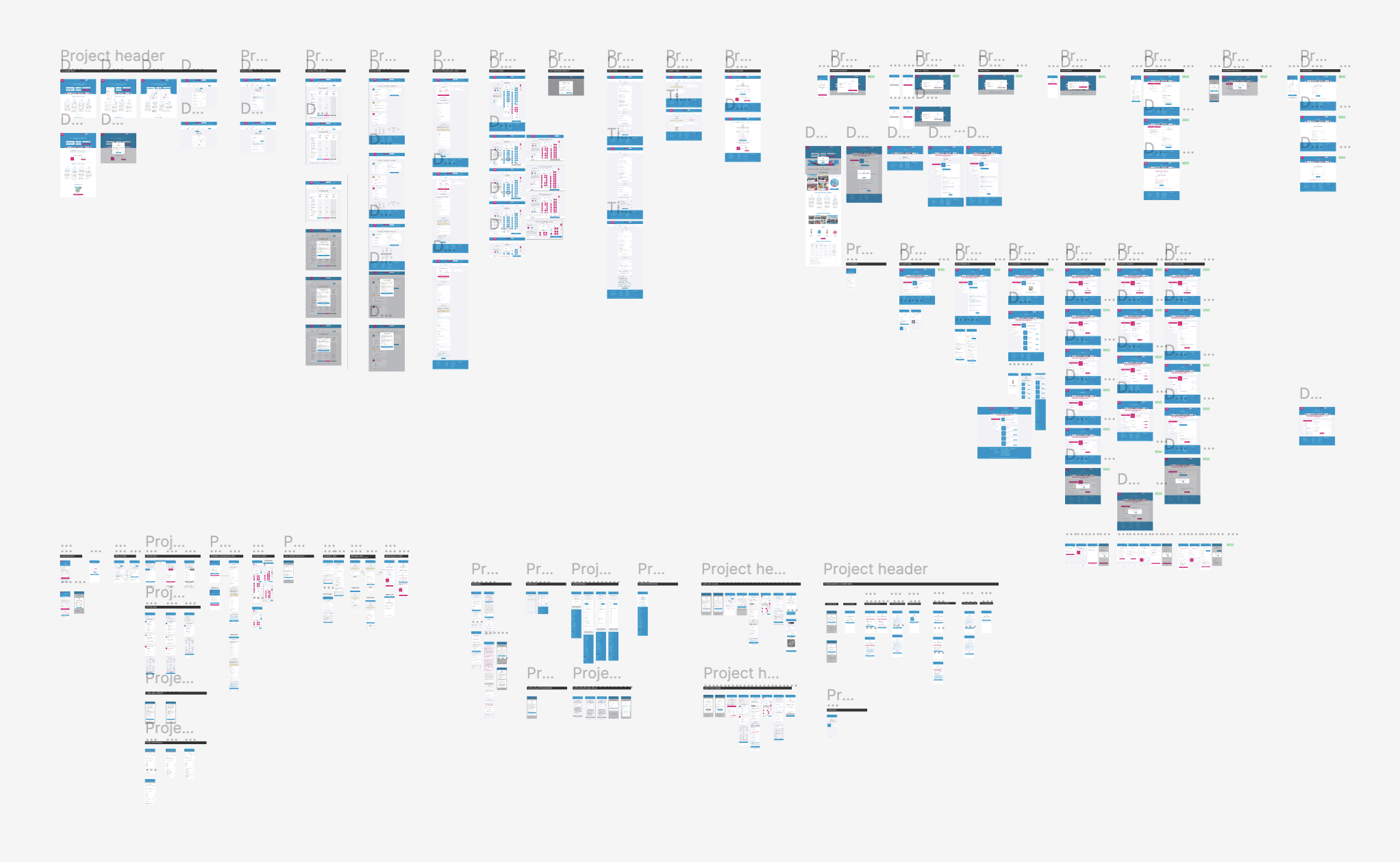
Beyond pre-sales, I also worked on the after-sales flow, ensuring the new offers were clearly visible in booking summaries. The most challenging task, however, was restoring and translating components under extreme time pressure: in just 3–4 days, I rebuilt ~50 website and app screens of the 2 flows, ensuring consistency and readiness for the Spanish team and developers.
Decide

Evaluate the quality of the solution

Decide

Evaluate the quality of the solution

Decide

Evaluate the quality of the solution

Lorem ipsum

The final step of this process is normally dedicated to testing the prototype with the target audience. This validation phase determines if the solution truly meets user needs or requires further refinement. It is also the moment, particularly within a discovery mindset, to decide if the investment is worth moving into production. While this decision is never easy (anchoring bias often makes it psychologically difficult to put aside previous efforts), it is critical to think about it. Launching a product that does not align with market needs risks wasted resources and declining performance metrics.

Lorem ipsum

In the case of OUIGO Spain, however, this step was largely theoretical. Regardless of readiness, the company was committed to launching in Spain to support its growth strategy. Budget constraints prevented user testing with Spanish customers, meaning this phase served less as a validation exercise and more as a confidence check on the work completed.
My feedback on this method

Applying this method was a highly insightful experience. By combining the Double Diamond and Design Sprint approaches, it provides a versatile and manageable framework. While the seven steps may seem daunting at first, they are complementary and guide a project from initial discovery to concrete outcomes.

The clearest advantage of this methodology lies in its deliverables, which help anchor stakeholders’ perspectives and reduce mid-project reversals, a common challenge in business. The term “Discovery Discipline” is well thought: it brings rigor and a structured framework to companies eager to explore, offering both flexibility for adaptation and tangible value even on a first project.

For the OUIGO implementation, practical challenges such as budget limitations, partial discovery applicability, and my first hands-on use, made the process somewhat complex. Nevertheless, it successfully introduced product owners and managers to a new, structured approach, demonstrating its value beyond immediate outputs. Collaborating with the OUIGO Squirrel team was particularly rewarding; being trusted for my expertise and sharing it collaboratively made the experience even more fulfilling.

Clutch outcome

This workshop prevented later second-guessing
and secured an accede to execution phase.

Clutch outcome

This workshop prevented later second-guessing
and secured an accede to execution phase.

What did I learn ?

Always nice to test new process

As we used to say, the journey is more important than the destination. I really enjoyed learning a new way to do discovery, especially his easiness to be understood and empowered the team. It’s a method that I would definitely want to try in another company to be more fluent, and push further the outcomes that I can extract from the deliverables.

Figma is the best design software

My international experience at ManoMano gave me the tips to hard replace each text you can found in Figma’s pages. Even it’s really long, I’d not have the time to translate the 2 whole flows. Although Figma promised to go even further for the translation with the A.I in 2024; I’m still waiting this feature to not loose my time on this kind of task.

Also thanks the easy way to adapt components for auto layout frames. Even if that was tricky to adapt every screens in auto layout, the possibility to prepare the components for an auto layout mechanism disarmed most of the potential issues that I could encountered. With the variables and the tokens (which weren’t released at this time), I would go even faster. Figma is definitely the best software to organize and iterate on mockups without loosing times.

What did I learn ?

Always nice to test new process

As we used to say, the journey is more important than the destination. I really enjoyed learning a new way to do discovery, especially his easiness to be understood and empowered the team. It’s a method that I would definitely want to try in another company to be more fluent, and push further the outcomes that I can extract from the deliverables.

Figma is the best design software

My international experience at ManoMano gave me the tips to hard replace each text you can found in Figma’s pages. Even it’s really long, I’d not have the time to translate the 2 whole flows. Although Figma promised to go even further for the translation with the A.I in 2024; I’m still waiting this feature to not loose my time on this kind of task.

Also thanks the easy way to adapt components for auto layout frames. Even if that was tricky to adapt every screens in auto layout, the possibility to prepare the components for an auto layout mechanism disarmed most of the potential issues that I could encountered. With the variables and the tokens (which weren’t released at this time), I would go even faster. Figma is definitely the best software to organize and iterate on mockups without loosing times.

Want to contact
me ?

If you have questions to ask about my work, a potential job, or just talking about design, feel free to contact me!

2025 @Camille Deverrière

Want to contact
me ?

If you have questions to ask about my work, a potential job, or just talking about design, feel free to contact me!

2025 @Camille Deverrière

Want ton contact me?

If you have questions to ask about my work, a potential job, or just talking about design, feel free to contact me!

2025 @Camille Deverrière